Beta Glucanase Animal Feed: Industrial Process Guide
Process guidance for beta glucanase animal feed use: dosing, pH, temperature, QC, COA/TDS/SDS, pilot trials and supplier checks.
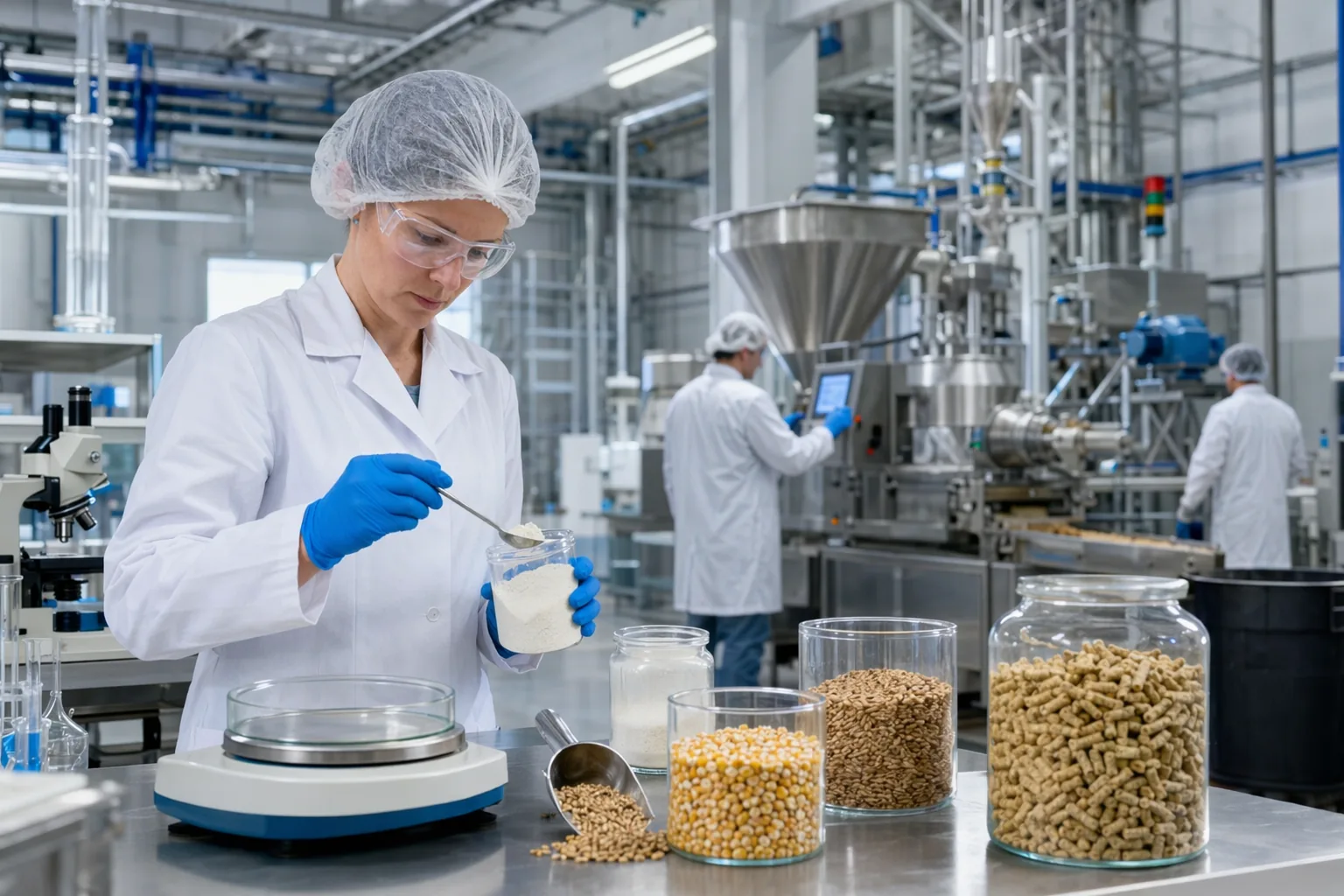
A practical guide for feed mills, premix manufacturers, integrators and feed-enzyme distributors selecting and validating beta glucanase for barley, oats, wheat, rye and other beta-glucan-rich raw materials. For bulk supply, send the grade, quantity and destination country for a quote.
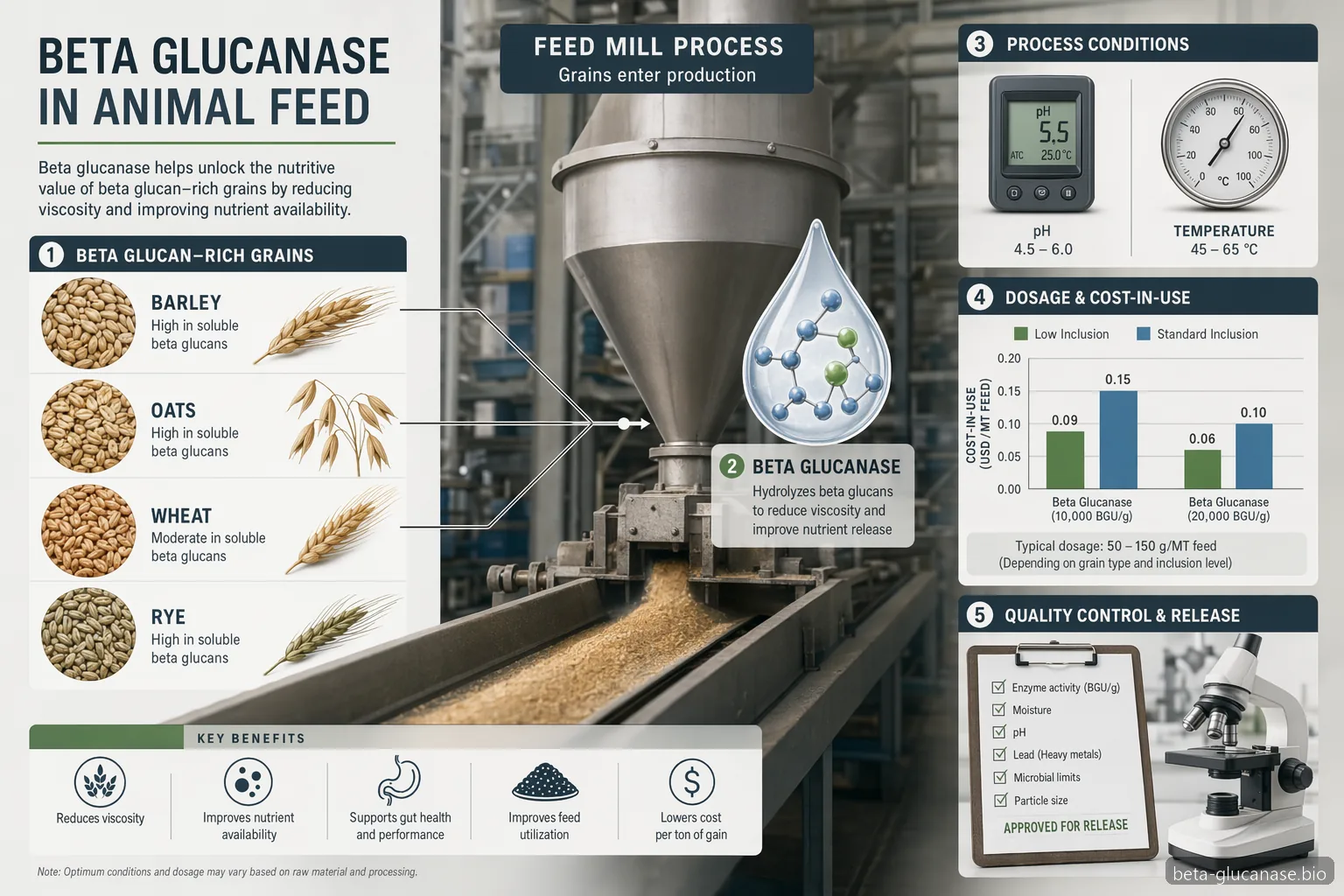
Why Beta Glucanase Matters in Animal Feed
Beta glucanase is an industrial enzyme used in animal feed to hydrolyze beta glucans, especially the mixed-linkage beta-glucans found in barley, oats, rye and some wheat by-products. For procurement teams asking what are beta glucans, they are soluble cell-wall polysaccharides that can increase digesta viscosity and affect feed processing consistency. Foods with high beta glucans are often valuable feed ingredients, but their fiber profile may require enzyme support in poultry, swine or aquaculture diets. In a B2B setting, beta glucanase animal feed decisions should be based on substrate profile, formulation economics and measurable mill or animal-performance indicators, not generic supplement claims. The best-fit product is selected by activity at relevant pH, tolerance to pelleting conditions, compatibility with premixes and predictable cost-in-use across changing grain lots.
Primary substrates: barley, oats, rye and cereal by-products • Common users: feed mills, integrators, premix manufacturers and enzyme blenders • Evaluation focus: viscosity, digestibility markers, feed conversion data and processing stability
Wheat-Heavy Rations and Multi-Enzyme Blends: What Feed Buyers Are Asking For
When corn gets expensive, feed producers replace part of it with wheat, and wheat brings non-starch polysaccharides that raise intestinal viscosity and cut nutrient absorption. Mills supplying these diets report that the need for an enzyme grows as wheat takes a larger share of the grain. There is no single fixed dose: suppliers recommend gradient testing against the wheat substitution ratio, and they sell xylanase and beta-glucanase as the working pair for these rations. The results buyers are told to look for are better digestibility, a lower feed conversion ratio, firmer droppings in layers, steadier growth in broilers and less nutrient loss in ruminants. The same sources warn that pelleting temperature can inactivate the enzyme and that storage humidity matters.
In commercial feed, beta-glucanase rarely travels alone. Complex blends that pair it with xylanase, cellulase and phytase are positioned against the anti-nutritional factors in feed grains, namely crude fibre, phytic acid and non-starch polysaccharides, which leave livestock absorbing feed poorly and suffering frequent diarrhoea. The commercial pitch is a heat-stable complex that survives the pellet mill and still works when dosed into a room-temperature premix, with claimed gains in feed conversion, less diarrhoea and piglet mortality, lower antibiotic use and a lower cost per tonne of feed. Treat these as supplier claims to confirm in your own trial.
For resellers and premix makers: ask for the blend's activity ratios, a pelleting recovery result and species-specific grades. • Set the dose by gradient trial against your wheat or barley share. • Store sealed and dry; check recovery after conditioning.
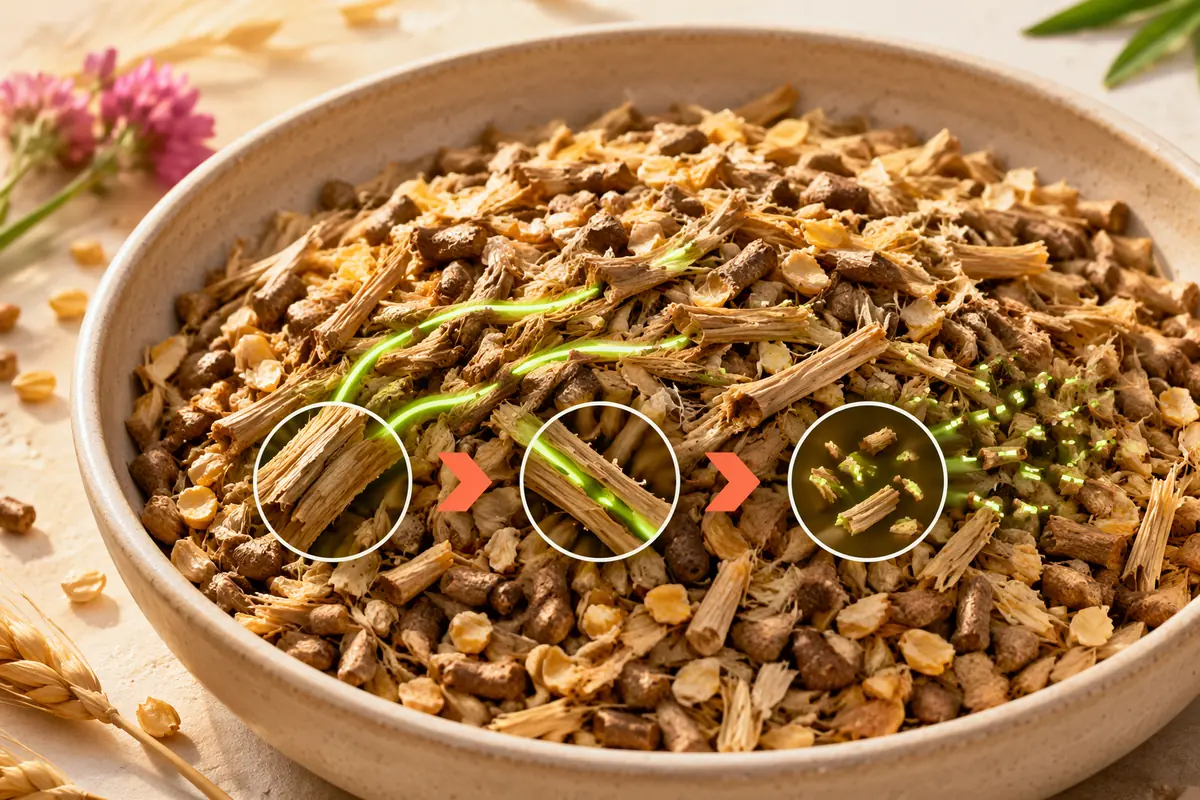
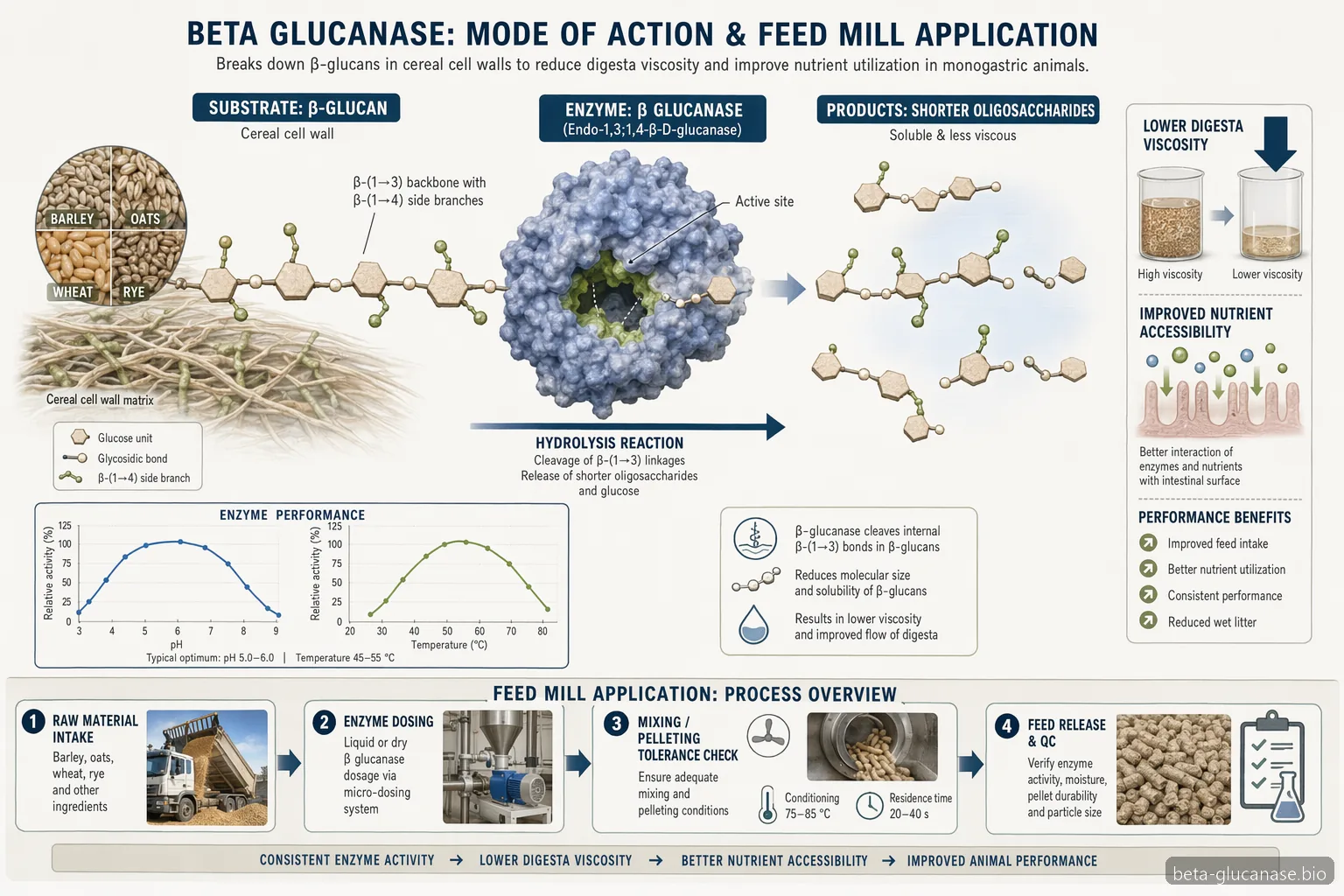
Process Conditions for Feed Mill Application
Industrial beta glucanase animal feed use typically begins with dry blending into premix or direct dosing into mash feed. Many commercial beta glucanase enzyme products are designed for activity in mildly acidic to neutral systems, often around pH 4.0 to 6.5, which aligns with parts of the digestive tract. Temperature exposure depends on product format. Powdered enzymes may be added post-conditioning where feasible, while thermostable or coated formats can tolerate higher pelleting conditions for limited residence times. As a practical starting point, feed manufacturers often evaluate dosage bands in the range of 50 to 300 g per metric ton of complete feed, or equivalent activity units defined by the supplier. Final inclusion should follow the TDS and be confirmed by pilot validation using the customer’s own formulation, mixer, conditioner, pellet mill and retention time.
Typical working pH target: about 4.0 to 6.5, product dependent • Evaluate conditioning temperatures commonly seen from 70 to 90°C • Confirm recovery after pelleting when thermal exposure is unavoidable • Use activity-unit dosing when comparing suppliers
Dosage Strategy and Cost-in-Use
A low purchase price does not always produce the lowest cost-in-use. For beta glucanase animal feed projects, compare delivered enzyme activity, declared assay method, recommended dosage, thermal recovery, shelf life, handling losses and formulation response. Two products with similar labels may differ in endo-glucanase profile, side activities, carrier system and stability after pelleting. A structured dosage trial should include a negative control, one or two standard supplier-recommended doses and, where economics justify it, a reduced-dose treatment. Measure feed viscosity indicators, pellet durability, moisture impact, animal response data or in vitro digestibility depending on the buyer’s validation model. The goal is to identify the lowest effective inclusion level that meets technical and commercial targets. This approach is especially important for industrial beta glucanase enzyme animal feed procurement, where annual tonnage magnifies small dosage or recovery differences.
Compare activity units delivered per ton, not only product kilograms • Include thermal recovery and storage stability in cost modeling • Use the same formulation and process settings across trial arms
Quality Control, Documentation and Release Checks
Supplier documentation should be reviewed before any production trial. A complete package normally includes a Certificate of Analysis, Technical Data Sheet and Safety Data Sheet. The COA should identify batch number, activity value, test method reference where available, manufacturing or release date and shelf-life guidance. The TDS should state recommended application, dosage range, storage conditions, pH and temperature profile, compatibility notes and handling instructions. The SDS should support safe receiving, storage and worker handling. Internal QC can include visual inspection, moisture checks where relevant, activity confirmation by an external or in-house lab and enzyme recovery testing after pelleting. Retain samples from incoming lots and pilot batches to support root-cause investigation if production performance changes. For industrial beta glucanase brewing animal feed buyers serving multiple markets, documentation discipline also helps keep application-specific claims and handling requirements separated.
Request COA, TDS and SDS before purchase approval • Retain incoming and production batch samples • Check enzyme recovery after heat processing • Align label claims with the intended feed-market application
Pilot Validation and Supplier Qualification
Pilot validation should mirror commercial reality rather than ideal laboratory conditions. Use representative raw materials, current feed formulas, normal mixing sequence, actual conditioning settings and the same packaging or storage period expected in production. Record cereal beta-glucan level where possible, enzyme addition point, mixer uniformity, moisture, temperature, retention time, pellet quality and any downstream animal or in vitro results. Supplier qualification should assess technical responsiveness, batch-to-batch consistency, lead time, packaging integrity, documentation quality and change-notification practices. Buyers may also request statements on origin, allergen handling, non-hazard classification where applicable and suitability for the intended feed segment, without assuming certifications that have not been provided. A strong supplier will support trial design, explain the assay basis for beta glucanase, and help translate pilot results into a defensible commercial dosage.
Run pilot batches under normal mill conditions • Document addition point, heat exposure and final enzyme recovery • Evaluate supplier support, consistency and change control • Convert trial data into a commercial specification before scale-up
Technical Buying Checklist
Buyer Questions
Beta glucans are cell-wall polysaccharides found in cereals such as barley, oats and rye. In feed manufacturing, beta-glucans can influence viscosity, processing behavior and nutrient accessibility depending on the grain source and inclusion rate. Beta glucanase is used to hydrolyze these substrates into smaller fragments. For industrial buyers, the relevant question is not whether beta glucans are generally good or bad, but whether enzyme use improves the target formulation economics.
Beta glucanase is selected for activity against beta glucans, including mixed-linkage cereal beta-glucans. General cellulase products may focus on cellulose or other plant fiber fractions and may not deliver the same response in barley- or oat-based diets. Some products include endo-glucanase activity that cuts internal bonds within glucan chains. Buyers should compare activity definitions, assay substrates and performance data before substituting one enzyme class for another.
A practical screening range is often 50 to 300 g per metric ton of complete feed, but the correct dose depends on enzyme activity, substrate level, pelleting conditions and target animal. Use the supplier’s TDS as the starting point and run pilot batches with a negative control and one or more test doses. Convert results into activity units per ton for fair supplier comparison.
Survival depends on formulation, product format, conditioning temperature, moisture, residence time and pellet mill design. Some beta glucanase products are coated or selected for higher thermal tolerance, while others are better added after heat treatment where possible. Do not rely only on stated temperature tolerance. Measure enzyme recovery after the actual pelleting process and include that value in cost-in-use calculations.
Request a current COA for the supplied batch, a TDS describing application conditions and dosage, and an SDS for safe handling and storage. For supplier qualification, also ask about shelf life, packaging, storage temperature, assay method, change-notification practices and technical support during trials. Avoid assuming certifications or claims unless the supplier provides verifiable documentation specific to the product and production site.
Beta-Glucanase for Research & Industry
Need Beta-Glucanase for your lab or production process?
ISO 9001 certified · Food-grade & research-grade · Ships to 80+ countries
Frequently Asked Questions
What are beta glucans in animal feed ingredients?
Beta glucans are cell-wall polysaccharides found in cereals such as barley, oats and rye. In feed manufacturing, beta-glucans can influence viscosity, processing behavior and nutrient accessibility depending on the grain source and inclusion rate. Beta glucanase is used to hydrolyze these substrates into smaller fragments. For industrial buyers, the relevant question is not whether beta glucans are generally good or bad, but whether enzyme use improves the target formulation economics.
How is beta glucanase different from general cellulase?
Beta glucanase is selected for activity against beta glucans, including mixed-linkage cereal beta-glucans. General cellulase products may focus on cellulose or other plant fiber fractions and may not deliver the same response in barley- or oat-based diets. Some products include endo-glucanase activity that cuts internal bonds within glucan chains. Buyers should compare activity definitions, assay substrates and performance data before substituting one enzyme class for another.
What dosage should a feed mill start with?
A practical screening range is often 50 to 300 g per metric ton of complete feed, but the correct dose depends on enzyme activity, substrate level, pelleting conditions and target animal. Use the supplier’s TDS as the starting point and run pilot batches with a negative control and one or more test doses. Convert results into activity units per ton for fair supplier comparison.
Can beta glucanase survive pelleting?
Survival depends on formulation, product format, conditioning temperature, moisture, residence time and pellet mill design. Some beta glucanase products are coated or selected for higher thermal tolerance, while others are better added after heat treatment where possible. Do not rely only on stated temperature tolerance. Measure enzyme recovery after the actual pelleting process and include that value in cost-in-use calculations.
What documents should be requested from a supplier?
Request a current COA for the supplied batch, a TDS describing application conditions and dosage, and an SDS for safe handling and storage. For supplier qualification, also ask about shelf life, packaging, storage temperature, assay method, change-notification practices and technical support during trials. Avoid assuming certifications or claims unless the supplier provides verifiable documentation specific to the product and production site.
Request a Bulk Feed Beta-Glucanase Quote
Send the species and diet (barley, oat or wheat share), the pelleting temperature, the quantity per order or per month, and the destination country. We reply within 24 hours with a grade recommendation, a free evaluation sample with COA/TDS and a bulk quote. Application specs: /applications/beta-glucanase-animal-feed-barley-oats/
Contact Us to Contributehello@mail.beta-glucanase.bio