Beta Glucanase Brewing: Specification Checklist for Industrial Brewers
Compare beta glucanase brewing specs for mash viscosity control, lauter performance, COA/TDS/SDS review, pilot trials, and cost-in-use.
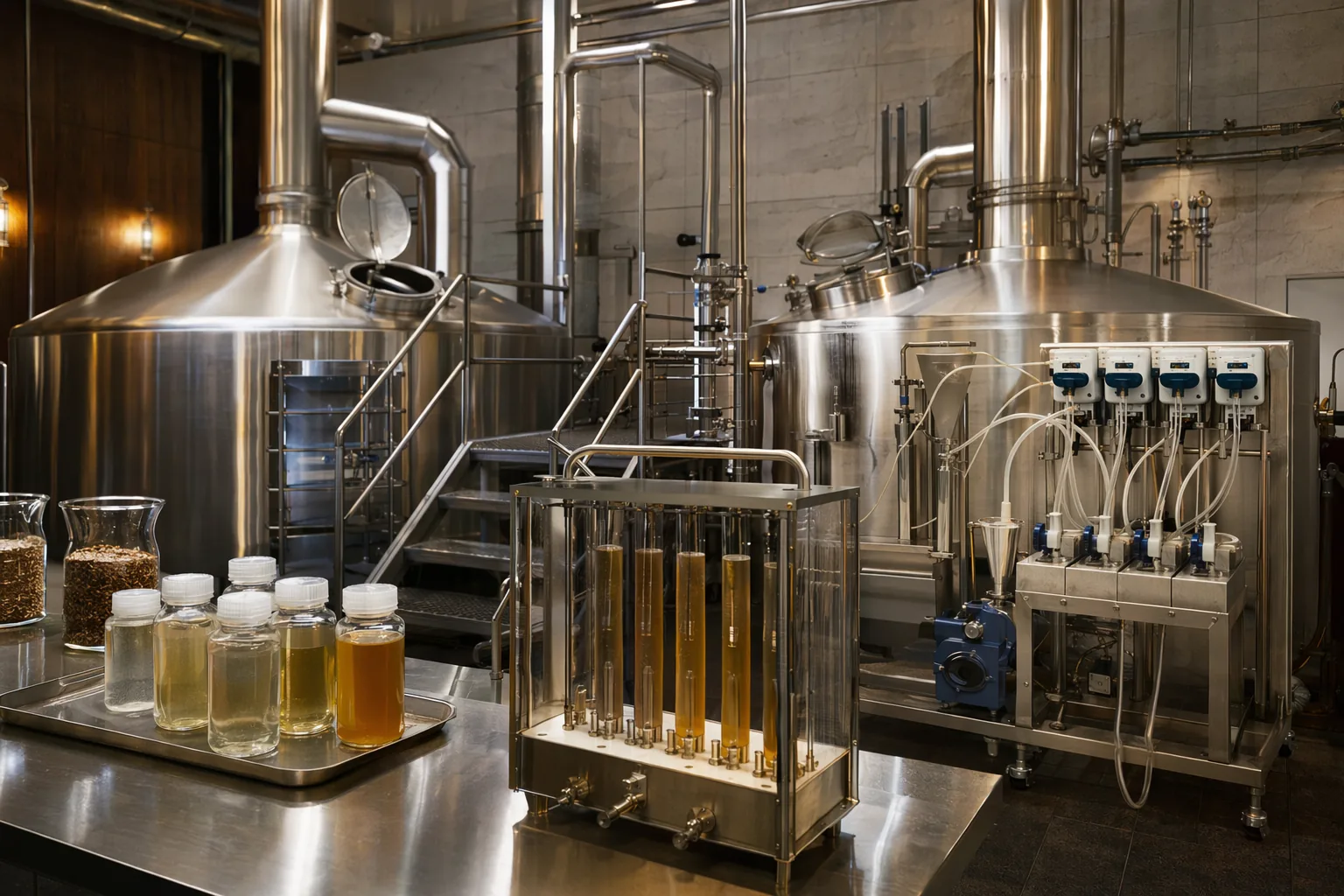
A practical buyer’s guide for comparing beta glucanase enzyme options for mash viscosity reduction, smoother lautering, and consistent brewery process performance.
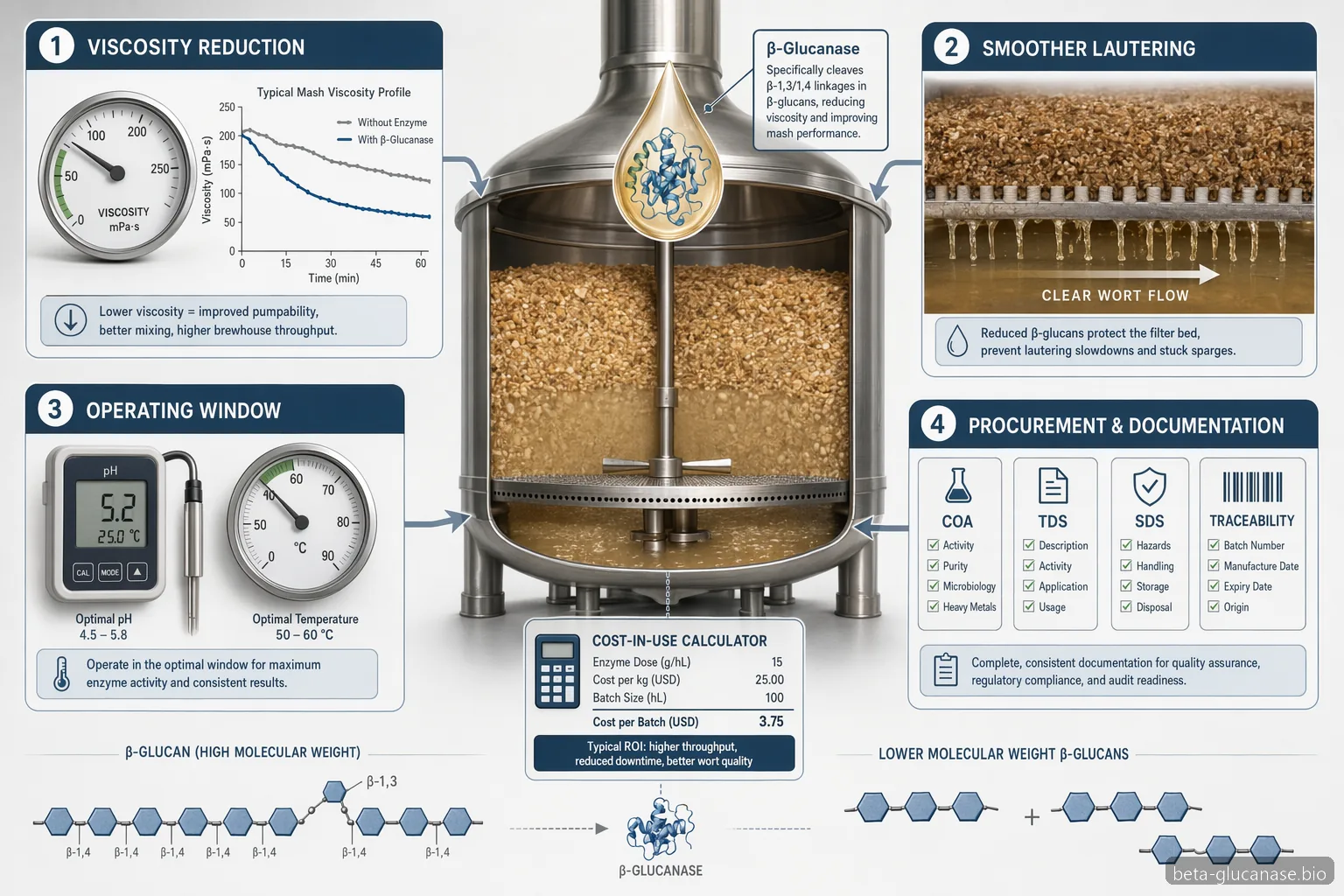
Why beta glucanase matters in brewing procurement
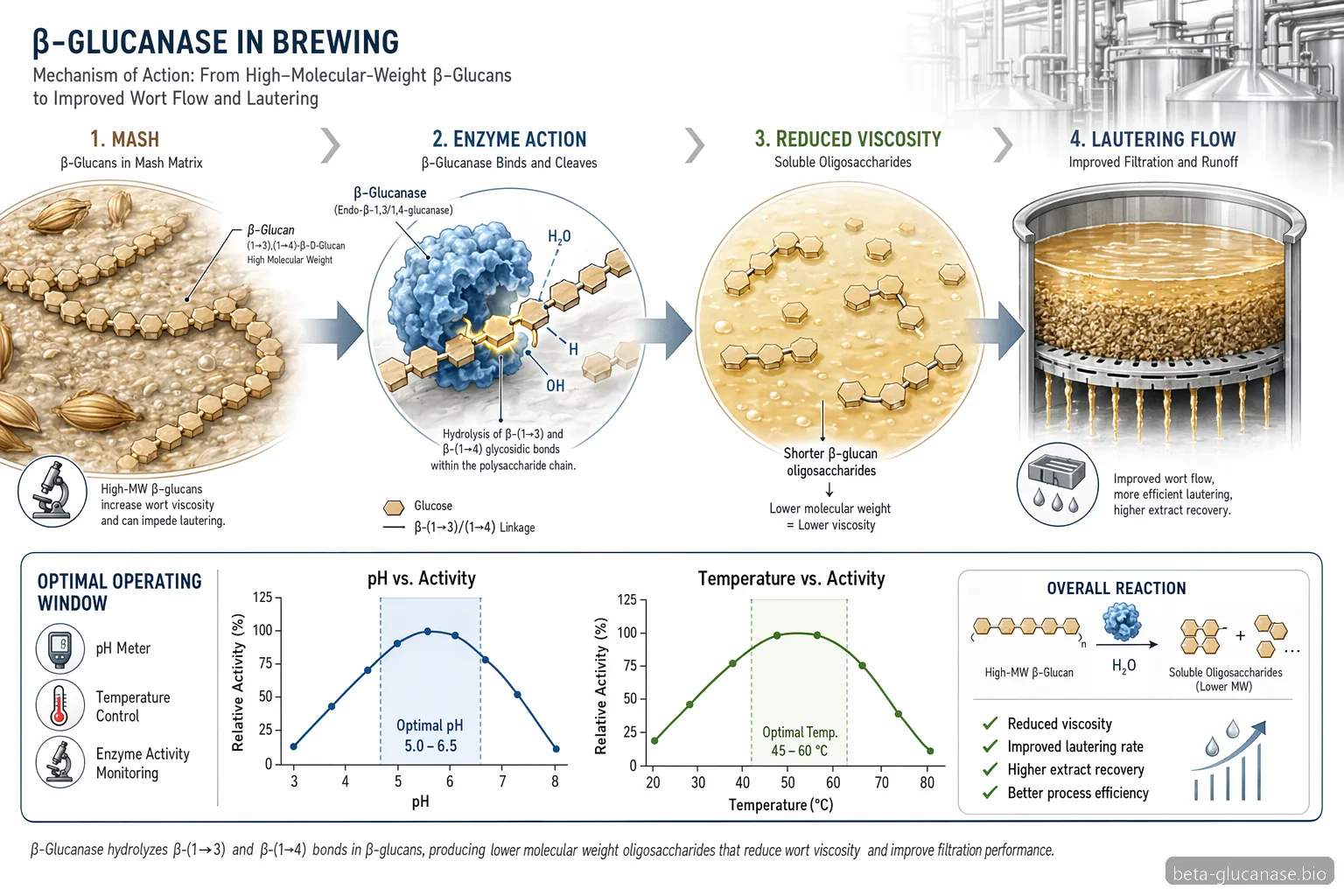
In brewing, beta glucans are non-starch polysaccharides from barley, oats, rye, wheat, and other cereals. Buyers searching “what are beta glucans” or “foods with high beta glucans” may find nutrition content, but industrial breweries need a process view: high beta-glucans can raise mash and wort viscosity, slow lautering, reduce filtration efficiency, and increase variability between malt lots. A beta glucanase enzyme brewing program is used to hydrolyze these gums during mashing or adjunct processing. Most commercial options are endo-glucanase preparations that cleave internal beta-glucan linkages, producing lower-molecular-weight fragments that move more easily through the grain bed. For B2B comparison, the question is not simply “what is beta glucanase,” but whether a specific beta-glucanase product matches your grist, brewhouse temperatures, hold times, and quality targets. The best purchasing decision combines technical fit, documentation, pilot validation, and reliable supply.
Common drivers: high adjunct use, difficult malt, slow lauter, haze risk, or filtration load. • Relevant grains include barley, oats, rye, wheat, and mixed adjunct grists. • The enzyme should be assessed as a processing aid within the brewery’s local regulatory framework.
Compare operating window before comparing price
A beta glucanase brewing specification should state the recommended pH range, temperature range, dosage band, and application point. Typical mash use is often evaluated around pH 5.0–5.8 and 45–65 °C, but the usable range depends on the enzyme source and formulation. Some products are designed for lower-temperature beta-glucan rests, while others tolerate warmer mash steps. Dosage may be expressed as grams per metric ton of malt, milliliters per metric ton of grist, or activity units per kilogram of substrate; because activity assays vary, compare performance at equal brewery conditions rather than assuming unit equivalence. A practical screening band might start around 25–150 g/ton of grist or 50–300 mL/ton for liquid products, then be refined in trials. Boiling usually inactivates the enzyme, but verify residual activity expectations in the TDS for your process and product style.
Confirm whether the product is optimized for mash-in, beta-glucan rest, or adjunct slurry treatment. • Ask whether calcium, sulfite, or cleaning chemical residues affect activity. • Record actual mash pH, temperature ramp, hold time, and grist composition during trials.
Documentation checklist: COA, TDS, SDS, and traceability
Before shortlisting beta glucanase suppliers, request a current Certificate of Analysis, Technical Data Sheet, and Safety Data Sheet. The COA should identify batch number, manufacture or release date, declared activity, physical form, and key release parameters used by the supplier. The TDS should describe recommended application, dosage guidance, storage conditions, shelf life, activity definition, and compatibility limits. The SDS should cover handling precautions, dust or aerosol controls, spill response, and transport information. For liquid enzyme products, check preservative system, density, color range, and storage temperature. For dry products, evaluate dusting risk, solubility, carrier type, and dosing equipment compatibility. Supplier qualification should also include lot-to-lot consistency, change notification practice, manufacturing site controls, and technical support availability. Avoid relying on unsupported claims or vague “high activity” language without a defined assay and brewery validation data.
Match COA activity units to the supplier’s stated assay method. • Confirm unopened shelf life and in-use storage after opening. • Request change notification for formulation, site, carrier, or activity method changes. • Review SDS controls for worker exposure to enzyme dust or aerosols.
Pilot validation plan for beta-glucanase in the brewhouse
A controlled pilot trial is the most reliable way to compare beta glucanase options. Run a no-enzyme control and at least two dosage levels using the same malt lot, water profile, mash schedule, mill setting, and lautering procedure. Measure mash or wort viscosity, lauter duration, runoff clarity, extract yield, turbidity, and residual beta-glucans where testing is available. Calcofluor-based beta-glucan analysis, filtration index, or brewery-specific haze and membrane throughput tests can help quantify benefits. Track any effect on foam, flavor, attenuation, and downstream filtration, even when the enzyme target is viscosity. If your process includes adjuncts rich in beta-glucans, validate separately because response may differ from all-malt brewing. The winning beta-glucanase is the one that delivers consistent process improvement at the lowest validated cost-in-use, not necessarily the one with the highest declared activity or lowest invoice price.
Use identical grist, mash thickness, pH adjustment, and temperature profile across treatments. • Include a control batch to separate enzyme effect from malt lot variability. • Measure practical KPIs: lauter time, pressure differential, viscosity, extract, turbidity, and filtration rate. • Repeat the preferred dosage at production scale before full approval.
Cost-in-use and supplier qualification criteria
For industrial enzyme purchasing, cost-in-use should include dose, activity retention in storage, dosing losses, freight, minimum order quantity, packaging disposal, production yield, and reduced downtime. A concentrated liquid beta glucanase may cost more per kilogram but dose more accurately or perform better under your mash conditions. A dry beta-glucanase may offer storage advantages but require dust controls and premixing. Compare suppliers on technical response time, batch documentation, availability of samples, lead time, inventory strategy, and willingness to support plant trials. Request realistic dosage guidance for your malt type and process rather than generic brochures. Where regulatory status matters, ask suppliers to provide documentation relevant to the intended market, but do not assume a certification exists unless the supplier provides verifiable records. Build approval around specification compliance, pilot data, supply reliability, and total brewing value.
Compare price per hectoliter or per metric ton of grist, not only price per kilogram. • Include labor, dosing equipment, storage, and quality testing in the cost model. • Qualify at least one backup supplier if beta-glucanase is critical to lautering performance. • Define acceptance criteria before production-scale trials begin.
Technical Buying Checklist
Buyer Questions
Beta glucanase is an industrial enzyme used to hydrolyze beta glucans from cereal grains during brewing. In practical brewhouse terms, it helps reduce mash and wort viscosity, which can support faster lautering and more consistent filtration. Commercial beta-glucanase products differ by activity method, temperature tolerance, pH range, form, and dosage, so they should be validated under actual brewery conditions.
The best addition point depends on the enzyme and mash program. Many breweries evaluate addition at mash-in or during a beta-glucan rest, often within pH 5.0–5.8 and a moderate temperature window such as 45–65 °C. The supplier’s TDS should define the recommended operating range. Confirm performance with pilot brews before changing production recipes.
Compare suppliers using COA, TDS, SDS, defined activity units, lot consistency, dosage guidance, storage stability, technical support, lead time, and trial performance. Do not select only by activity claim or price per kilogram. A supplier with better process fit, lower validated dose, reliable documentation, and responsive technical service may deliver a lower total cost-in-use.
Useful checks include mash or wort viscosity, lauter time, runoff clarity, extract yield, turbidity, filtration throughput, and residual beta-glucans where the brewery has access to testing. A calcofluor-based beta-glucan method or filtration index can add quantitative evidence. Always include a no-enzyme control so improvements are not confused with malt lot or process variation.
Beta-Glucanase for Research & Industry
Need Beta-Glucanase for your lab or production process?
ISO 9001 certified · Food-grade & research-grade · Ships to 80+ countries
Frequently Asked Questions
What is beta glucanase in brewing?
Beta glucanase is an industrial enzyme used to hydrolyze beta glucans from cereal grains during brewing. In practical brewhouse terms, it helps reduce mash and wort viscosity, which can support faster lautering and more consistent filtration. Commercial beta-glucanase products differ by activity method, temperature tolerance, pH range, form, and dosage, so they should be validated under actual brewery conditions.
When should beta glucanase be added in the mash?
The best addition point depends on the enzyme and mash program. Many breweries evaluate addition at mash-in or during a beta-glucan rest, often within pH 5.0–5.8 and a moderate temperature window such as 45–65 °C. The supplier’s TDS should define the recommended operating range. Confirm performance with pilot brews before changing production recipes.
How should breweries compare beta glucanase enzyme suppliers?
Compare suppliers using COA, TDS, SDS, defined activity units, lot consistency, dosage guidance, storage stability, technical support, lead time, and trial performance. Do not select only by activity claim or price per kilogram. A supplier with better process fit, lower validated dose, reliable documentation, and responsive technical service may deliver a lower total cost-in-use.
What QC tests show whether beta-glucanase is working?
Useful checks include mash or wort viscosity, lauter time, runoff clarity, extract yield, turbidity, filtration throughput, and residual beta-glucans where the brewery has access to testing. A calcofluor-based beta-glucan method or filtration index can add quantitative evidence. Always include a no-enzyme control so improvements are not confused with malt lot or process variation.
Related: Beta-Glucanase for Brewing Wort Viscosity and Lautering
Turn This Guide Into a Supplier Brief Request a beta glucanase brewing specification review, sample plan, and pilot-trial dosage recommendation for your brewhouse. See our application page for Beta-Glucanase for Brewing Wort Viscosity and Lautering at /applications/beta-glucanase-brewing-wort-viscosity/ for specs, MOQ, and a free 50 g sample.
Contact Us to Contribute