Beta Glucanase for Brewing: Supplier Guide for Industrial Buyers
Buy beta glucanase enzyme for brewing with practical guidance on mash use, dosage, pH, temperature, QC, COA/TDS/SDS, and supplier qualification.
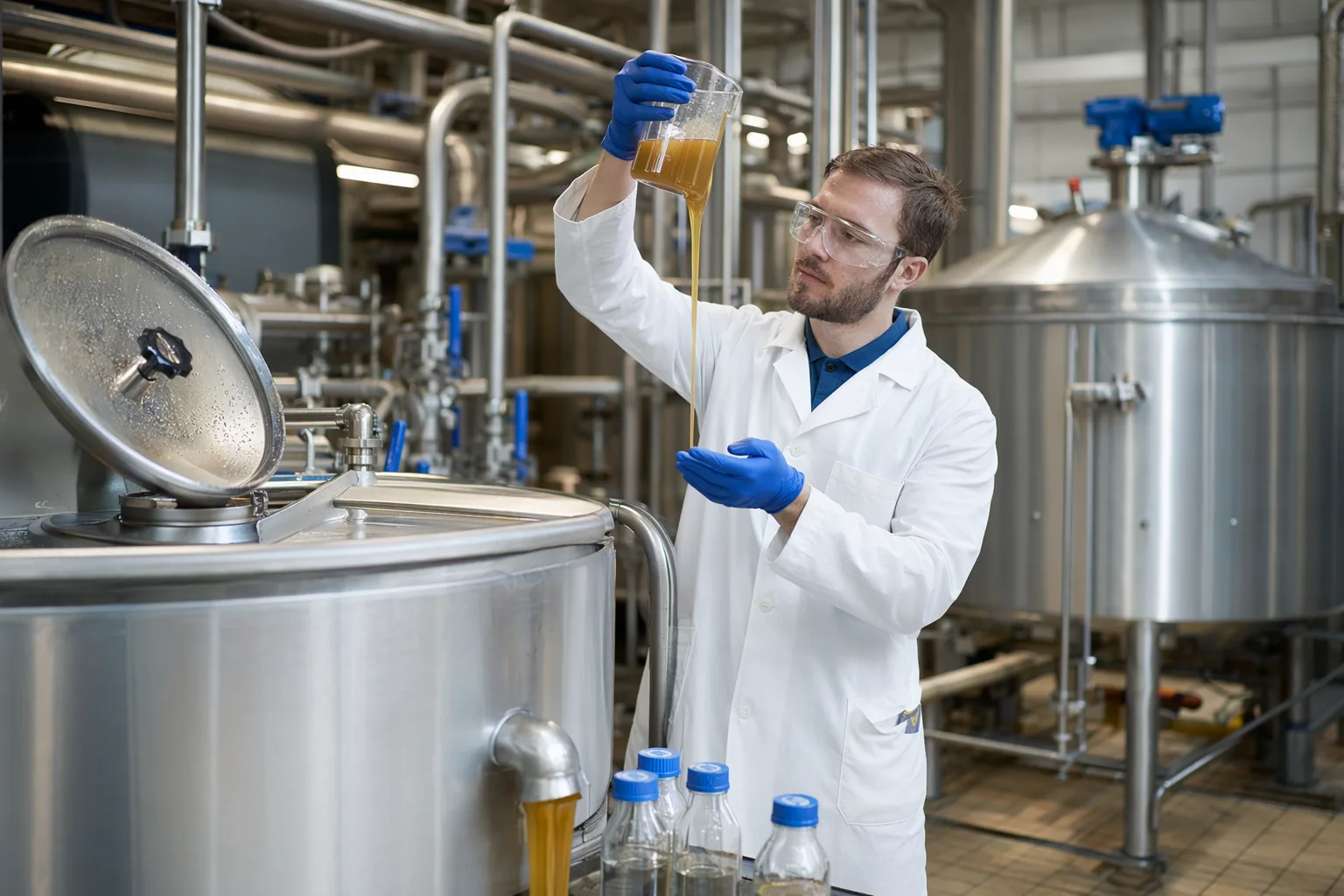
Source a beta glucanase enzyme that improves mash handling, wort separation, and filtration consistency when processing barley, adjuncts, and high beta-glucan raw materials.
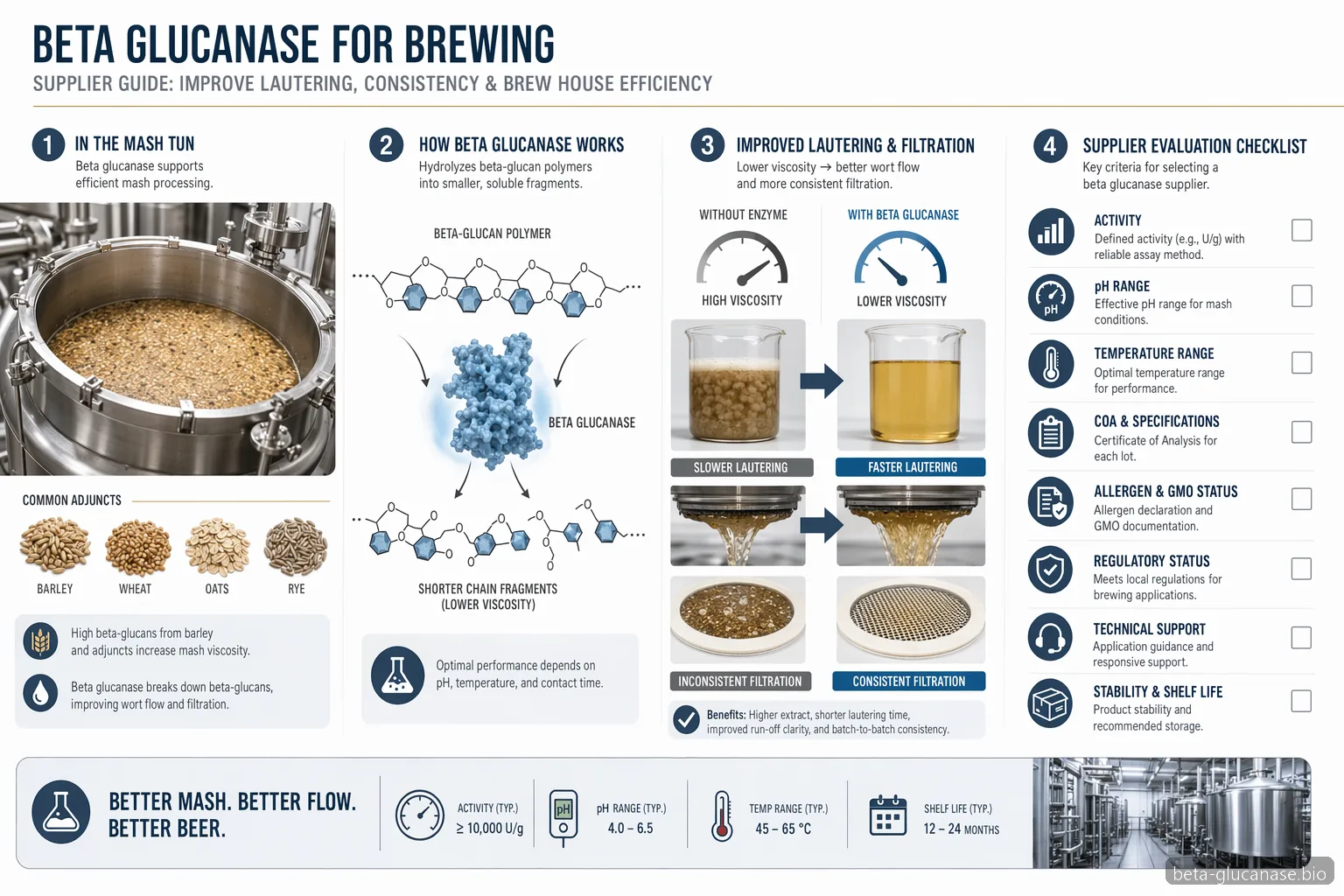
Why Brewers Buy Beta Glucanase
Beta glucanase is an industrial enzyme used in brewing to reduce problematic beta glucans from barley, wheat, oats, rye, and some adjunct streams. For buyers asking what are beta glucans or what is beta glucans, they are cell-wall polysaccharides that can dissolve into mash and wort, increasing viscosity and slowing separation. Foods with high beta glucans include oats and barley, and those same raw materials can create processing challenges in beer production. A beta glucanase enzyme, often described as beta-glucanase or endo-glucanase, cleaves internal beta-glucan linkages into shorter fragments that flow more easily. In practical B2B terms, the goal is not a generic enzyme addition; it is better lauter performance, more predictable filtration, and lower process variability across raw material lots.
Useful with under-modified malt, high-adjunct grists, and viscous wort streams. • Supports process efficiency rather than flavor claims. • Best selected by activity, stability, and cost-in-use.
Typical Brewing Process Conditions
Most commercial beta glucanase brewing applications target the mash or cereal cooking interface, where beta-glucans are accessible before wort separation. Exact conditions depend on the product, but many fungal or bacterial beta glucanase preparations are evaluated around pH 4.5 to 6.0 and 40 to 60 °C. Some enzymes lose activity during high-temperature mash steps, so buyers should review the TDS for optimum range, residual activity, and thermal inactivation guidance. Common screening dosage bands may start around 10 to 100 g per metric ton of grist for powders or 10 to 100 mL per hL of mash for liquids, but activity units differ widely. Always run lab and pilot trials using the supplier’s stated activity method rather than comparing dose by weight alone.
Confirm addition point: mash-in, beta-glucan rest, cereal cooker, or adjunct slurry. • Track pH at actual mash temperature, not only room-temperature samples. • Avoid overdosing assumptions; optimize against measurable filtration outcomes.
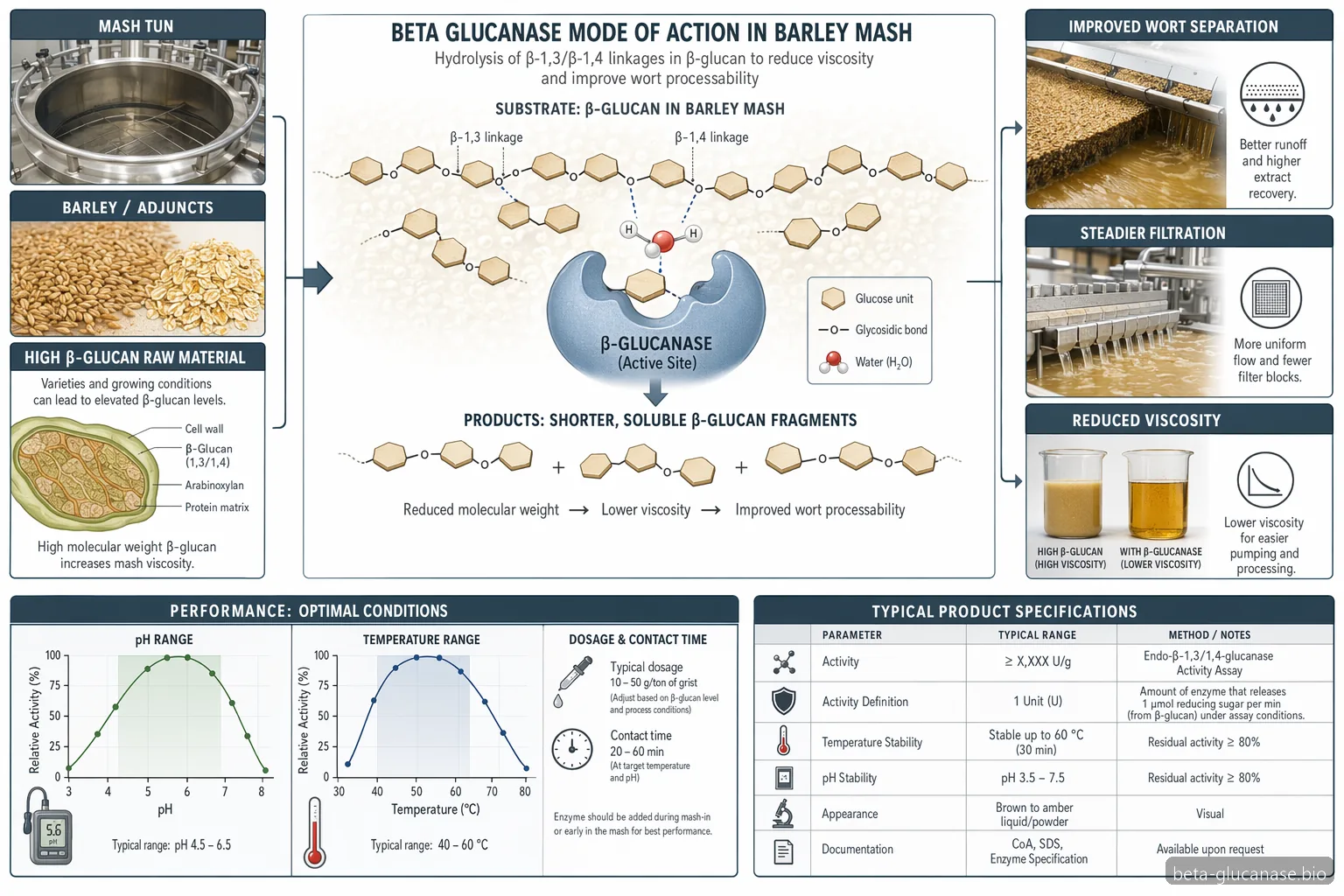
How to Evaluate Enzyme Performance
A beta glucanase supplier should help define QC checks that connect enzyme activity to brewhouse value. Important indicators include mash viscosity, wort beta-glucan content, lauter runoff rate, mash filter cycle time, turbidity, extract recovery, and downstream beer filtration pressure rise. Calcofluor-based beta-glucan testing is commonly used in brewing labs, while viscosity and filtration trials provide practical process confirmation. Run a control batch without enzyme, then compare at two or three dose levels under the same malt lot, water profile, mash schedule, and bed loading. For industrial buyers, the strongest validation combines bench screening with pilot-scale confirmation before full plant adoption. This approach protects against hidden variables such as malt modification, adjunct particle size, shear, residence time, and heat exposure.
Compare enzyme-treated and untreated controls. • Measure viscosity and beta-glucan concentration where possible. • Include filtration rate, pressure trend, and extract yield in the trial report. • Check whether the enzyme affects foam, clarity, or sensory targets in your process.
Documentation Buyers Should Request
Before purchasing beta glucanase enzyme for production, request a current Certificate of Analysis, Technical Data Sheet, and Safety Data Sheet. The COA should identify batch number, activity, specification limits, appearance, and any relevant microbiological or heavy metal tests if offered by the manufacturer. The TDS should explain activity definition, recommended pH and temperature range, dosage guidance, storage conditions, shelf life, carrier system, solubility, and handling. The SDS should support safe warehousing and use, especially because enzyme dust or aerosols may cause respiratory sensitization in occupational settings. Buyers should also ask for country-of-origin information, lot traceability, packaging options, and change notification practices. Avoid assuming certifications or regulatory approvals; confirm only what the supplier can document for your market and intended application.
COA: batch-specific activity and specification confirmation. • TDS: application conditions and dosage guidance. • SDS: safe handling, storage, and exposure precautions. • Traceability: lot coding, shelf life, and change control.
Supplier Qualification and Cost-in-Use
The lowest price per kilogram is not always the lowest cost-in-use. A concentrated beta-glucanase may cost more per unit but require a lower dose, reduce filtration delays, or improve brewhouse scheduling reliability. Supplier qualification should include technical responsiveness, consistency between batches, inventory planning, packaging suitability, and ability to support pilot validation. Ask whether the supplier can provide activity comparison data, recommended trial protocols, and guidance for scale-up from lab mashes to commercial vessels. Commercial teams should calculate cost per hL, cost per metric ton of grist, and savings from reduced cycle time or filter media use. For contract negotiations, specify product grade, activity minimum, packaging, storage requirements, shelf life at delivery, documentation package, and procedures for nonconforming batches.
Calculate cost per hL or per metric ton of grist. • Include operational savings, not just enzyme price. • Qualify at least one backup supply option for continuity. • Define batch release and complaint procedures in purchasing terms.
When Beta Glucanase Fits Your Brewhouse
Beta glucanase is most relevant when wort separation or filtration becomes variable because of raw material choice, crop season, malt modification, or adjunct use. It can be especially useful for brewers processing barley lots with elevated beta glucans, using unmalted cereals, increasing oat or wheat inclusion, or managing high-gravity production where viscosity matters. It is not a substitute for sound milling, mash temperature control, pH management, or appropriate lautering practice. The best results come from matching enzyme characteristics to the real process window and verifying outcomes with production data. Buyers comparing beta glucanase, beta-glucanase, and endo-glucanase products should focus on the specific substrate activity, brewing conditions, and supplier support rather than terminology alone.
Use when viscosity, runoff, or filtration pressure is a recurring constraint. • Validate with your grist, equipment, and mash schedule. • Combine with good process control for consistent results.
Technical Buying Checklist
Buyer Questions
Beta glucanase is an enzyme preparation used to hydrolyze beta glucans in mash or wort. In brewing, it is typically selected to reduce viscosity-related processing issues, improve lauter or mash filter performance, and support more predictable filtration. Buyers should evaluate the beta glucanase enzyme under their own pH, temperature, grist, and residence-time conditions before scaling to production.
Beta glucans are polysaccharides found in cereal cell walls, especially barley and oats. In brewing, soluble beta-glucans can increase mash and wort viscosity, which may slow runoff, raise filtration pressure, or create batch-to-batch variability. The issue is process-related, not medical or supplement-focused. Enzyme treatment is one tool for managing these materials alongside malt selection and mash control.
Dosage depends on enzyme activity, formulation, grist composition, malt quality, pH, temperature, and contact time. A practical starting screen may compare untreated control, low dose, and high dose within the supplier’s recommended range. Do not compare products only by kilograms or liters added. Normalize by declared activity and calculate cost-in-use per hL or per metric ton of grist.
Request a batch-specific COA, current TDS, and SDS before approving a beta-glucanase for plant use. The COA should confirm activity and specification limits. The TDS should cover activity method, dosage, pH, temperature, storage, and shelf life. The SDS should address safe handling and exposure controls. For supplier qualification, also ask about traceability, change control, packaging, and technical support.
No. Beta glucanase can help manage beta-glucans, but it does not replace proper milling, mash schedule design, pH control, malt quality management, or lautering practice. The enzyme should be treated as a process aid validated against measurable outcomes. The best purchasing decision is based on pilot data, consistent documentation, reliable supply, and a clear cost-in-use calculation.
Beta-Glucanase for Research & Industry
Need Beta-Glucanase for your lab or production process?
ISO 9001 certified · Food-grade & research-grade · Ships to 80+ countries
Frequently Asked Questions
What is beta glucanase in brewing?
Beta glucanase is an enzyme preparation used to hydrolyze beta glucans in mash or wort. In brewing, it is typically selected to reduce viscosity-related processing issues, improve lauter or mash filter performance, and support more predictable filtration. Buyers should evaluate the beta glucanase enzyme under their own pH, temperature, grist, and residence-time conditions before scaling to production.
What are beta glucans and why do they matter to brewers?
Beta glucans are polysaccharides found in cereal cell walls, especially barley and oats. In brewing, soluble beta-glucans can increase mash and wort viscosity, which may slow runoff, raise filtration pressure, or create batch-to-batch variability. The issue is process-related, not medical or supplement-focused. Enzyme treatment is one tool for managing these materials alongside malt selection and mash control.
How much beta glucanase should a brewery use?
Dosage depends on enzyme activity, formulation, grist composition, malt quality, pH, temperature, and contact time. A practical starting screen may compare untreated control, low dose, and high dose within the supplier’s recommended range. Do not compare products only by kilograms or liters added. Normalize by declared activity and calculate cost-in-use per hL or per metric ton of grist.
What documents should an industrial buyer request?
Request a batch-specific COA, current TDS, and SDS before approving a beta-glucanase for plant use. The COA should confirm activity and specification limits. The TDS should cover activity method, dosage, pH, temperature, storage, and shelf life. The SDS should address safe handling and exposure controls. For supplier qualification, also ask about traceability, change control, packaging, and technical support.
Can beta glucanase replace good brewing process control?
No. Beta glucanase can help manage beta-glucans, but it does not replace proper milling, mash schedule design, pH control, malt quality management, or lautering practice. The enzyme should be treated as a process aid validated against measurable outcomes. The best purchasing decision is based on pilot data, consistent documentation, reliable supply, and a clear cost-in-use calculation.
Related: Beta-Glucanase for Brewing Wort Viscosity and Lautering
Turn This Guide Into a Supplier Brief Request a brewing beta glucanase quote with COA, TDS, SDS, dosage guidance, and pilot trial support. See our application page for Beta-Glucanase for Brewing Wort Viscosity and Lautering at /applications/beta-glucanase-brewing-wort-viscosity/ for specs, MOQ, and a free 50 g sample.
Contact Us to Contribute