Beta Glucanase Powder Supplier: Dosage, pH, and Temperature in Brewing
Troubleshoot lautering, viscosity, and filtration with brewing beta-glucanase: dosage, pH, temperature, QC, COA/TDS/SDS, and pilot validation.
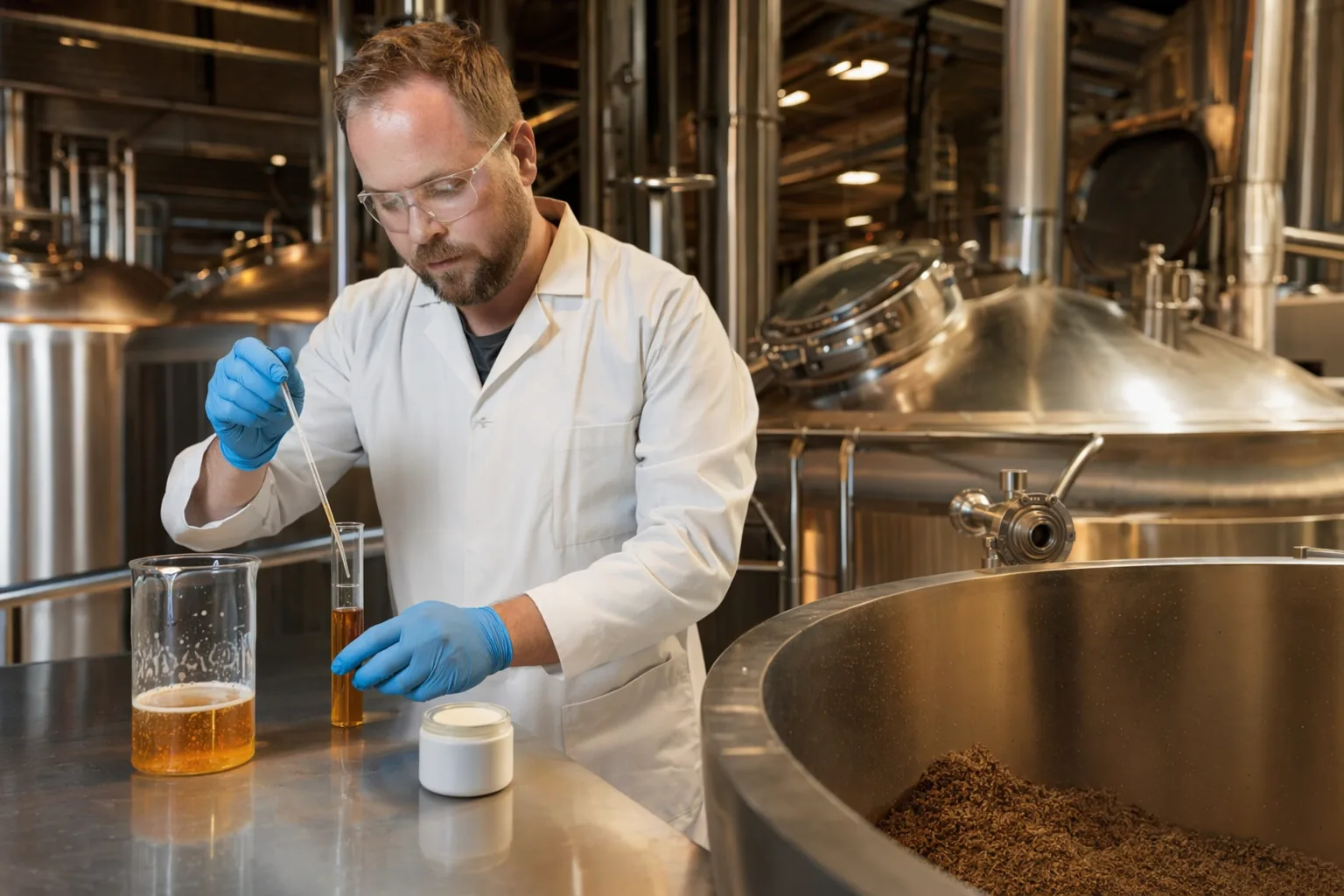
Need a beta glucanase powder supplier for brewing process troubleshooting? Use the right enzyme specification, addition point, and validation plan to reduce wort viscosity and improve lauter and filtration performance.
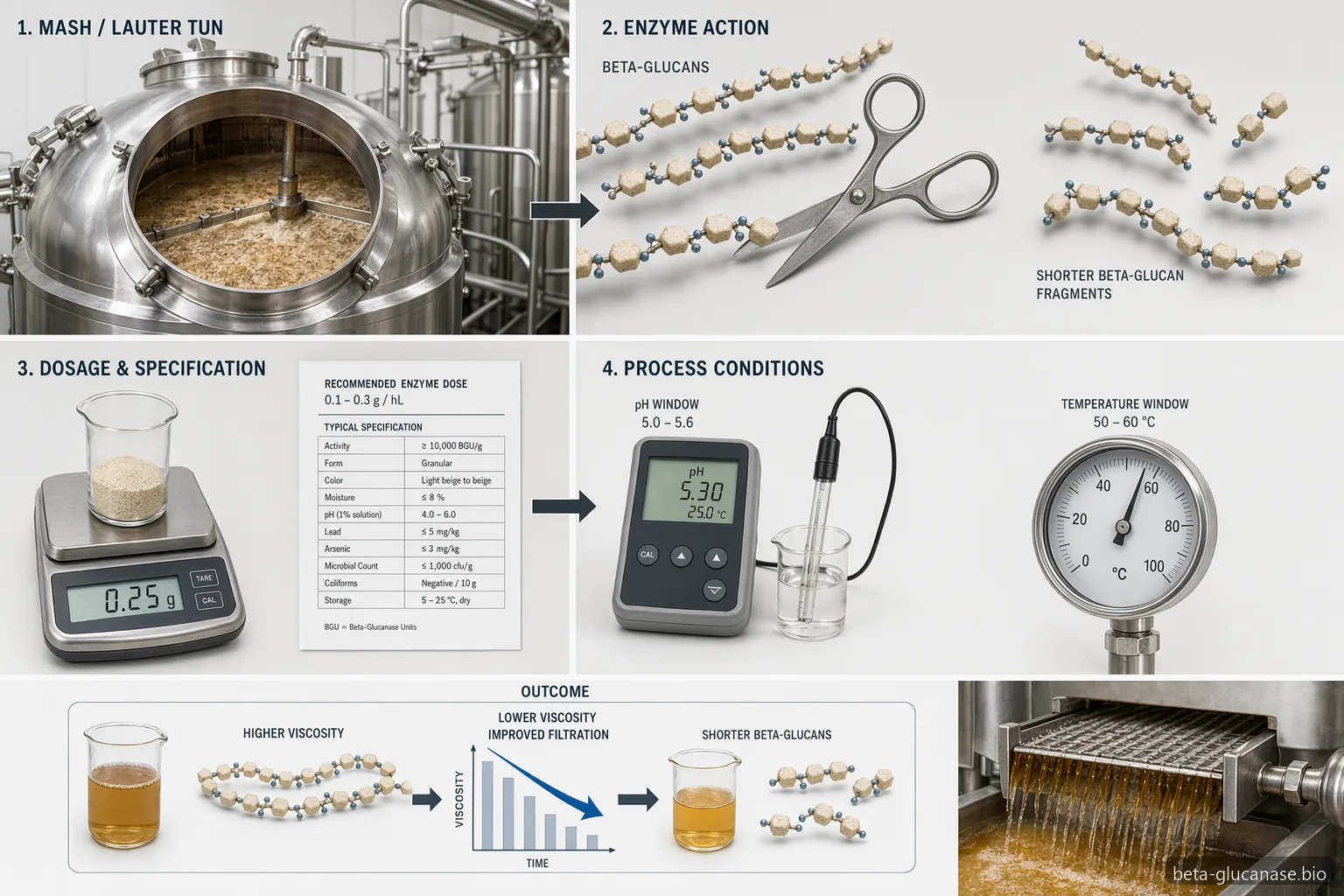
Why Beta-Glucans Create Brewing Problems
Beta glucans, also written beta-glucans, are cell-wall polysaccharides found in barley, oats, rye, wheat, and some high-fiber adjuncts. For buyers asking what are beta glucans or foods with high beta glucans, the brewing issue is not nutrition; it is process performance. Under-modified malt, high adjunct loading, poor malt storage, or short mashing can leave soluble beta glucans in wort. These polymers increase viscosity, reduce wort run-off, blind filters, and can contribute to turbidity or inconsistent beer clarification. A beta glucanase enzyme, especially endo-glucanase activity, hydrolyzes internal beta-1,3 and beta-1,4 linkages to reduce molecular weight. When specified correctly, beta-glucanase supports predictable lautering and downstream filtration without replacing malt QC, milling control, or proper mash design.
Common symptoms: slow lauter, high differential pressure, hazy wort, and variable extract recovery. • Risk factors: under-modified malt, high barley adjunct, oat or rye recipes, and compressed mash schedules. • Control point: test both raw material beta-glucans and wort viscosity before changing dosage.
Choosing a Beta Glucanase Powder Supplier
A reliable beta glucanase powder supplier should help you qualify both the enzyme and the process fit. Do not evaluate only the price per kilogram. Industrial enzyme activity, carrier system, granulation, solubility, moisture, and recommended handling can change cost-in-use. Request a current COA for each batch, a TDS that states activity units and application guidance, and an SDS for plant safety review. For brewing, ask whether the product is designed for mash addition, adjunct cooking support, or broader cereal processing. A beta glucanase supplier for brewing should also discuss compatibility with mash pH, calcium levels, protease or amylase blends, and the thermal profile of your brewhouse. Supplier qualification should include document review, sample testing, pilot brew performance, packaging assessment, and traceability from production batch to delivery.
Ask for COA, TDS, SDS, activity assay description, shelf-life, and storage conditions. • Confirm the enzyme is suitable for brewing process use, not dietary supplement positioning. • Compare cost-in-use using trial data, not purchase price alone. • Verify packaging integrity, dust controls, labeling, lot traceability, and lead time.
Dosage Starting Points and Scale-Up
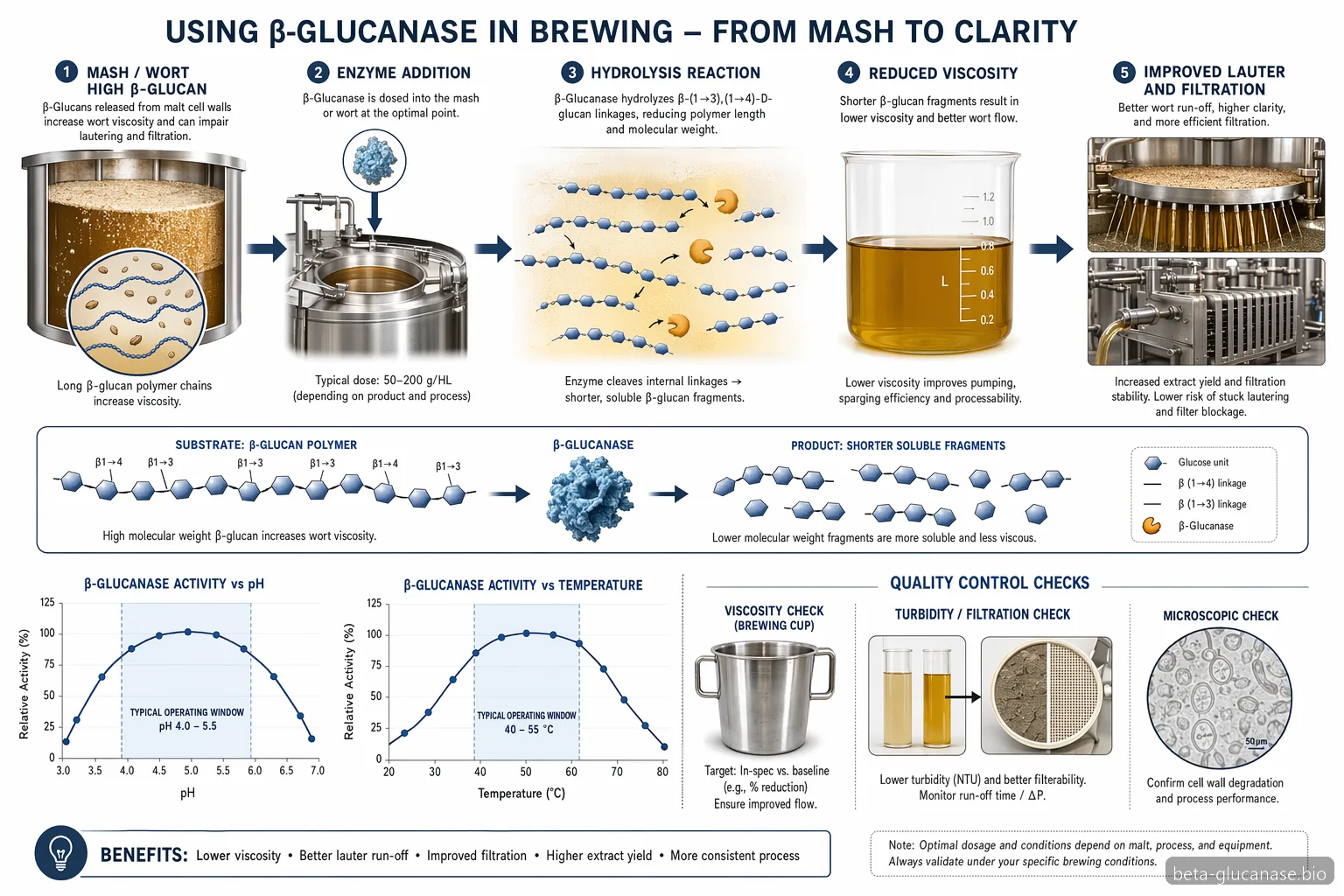
Beta glucanase dosage should be set by activity units, grist composition, malt beta-glucan load, mash residence time, and target viscosity. Because activity units differ by supplier, a practical first screen is often 50–150 g of enzyme powder per metric ton of grist, or a supplier-equivalent dose based on declared activity. High-risk grists with oats, rye, unmalted barley, or under-modified malt may require higher trial points, such as 200 g per metric ton, if allowed by the supplier’s TDS and local process rules. Run a no-enzyme control and at least two dosage levels. Track lauter time, wort viscosity, beta-glucans, turbidity, extract, filtration pressure, and sensory neutrality. The optimum is the lowest dose that meets throughput and quality targets with repeatable batch performance.
Start with bench mash or pilot brews before production-wide adoption. • Use a control batch to separate enzyme effect from malt variation. • Record enzyme addition weight, grist weight, mash pH, temperature, and hold time. • Select the dose by viscosity reduction, lauter improvement, and total cost-in-use.
pH, Temperature, and Addition Point
Most brewing beta-glucanase preparations perform in the weakly acidic mash range, but the exact optimum depends on the enzyme source and formulation. As a conservative trial window, evaluate pH 5.0–5.8 and temperatures around 45–60 °C, with some products tolerating short exposure near 65 °C. Add the enzyme during mash-in or an early beta-glucan rest when sufficient water dispersion and residence time are available. Avoid dosing into zones that immediately exceed the product’s thermal stability, because denaturation can occur before meaningful hydrolysis. If the brewhouse uses high-temperature infusion, decoction, or separate adjunct cooking, confirm whether split dosing is appropriate. Final inactivation usually occurs during higher-temperature mashing or wort boiling, but verify with the supplier’s TDS and your HACCP or process review.
Typical trial pH: 5.0–5.8 in mash. • Typical trial temperature: 45–60 °C, product dependent. • Common addition point: mash-in or beta-glucan rest. • Check heat stability before high-temperature infusion or adjunct cooking.
QC Checks for Troubleshooting Lauter and Filtration
Troubleshooting should connect enzyme use to measurable brewing outcomes. Before changing dose, collect baseline data across several brews: malt COA, Congress wort or plant wort beta-glucans, viscosity, lauter duration, turbidity, extract yield, and filter differential pressure. During trials, keep milling gap, liquor-to-grist ratio, mash schedule, and grist bill as constant as practical. Use the same laboratory methods and sampling points for control and enzyme batches. If beta-glucans fall but lautering remains poor, investigate husk integrity, mash bed compaction, false-bottom loading, protein rest, or adjunct gelatinization. If filtration improves but haze persists, evaluate protein-polyphenol balance and clarification aids. A good beta-glucanase program is therefore a controlled process optimization, not a one-variable chemical fix.
Measure beta-glucans and viscosity at consistent wort sampling points. • Track lauter time, runoff gravity, turbidity, and filter pressure. • Keep milling, mash profile, and grist bill stable during trials. • Review non-enzyme causes if results are inconsistent.
Procurement Checklist for Industrial Buyers
For B2B purchasing, the best supplier discussion combines technical fit, documentation, logistics, and commercial risk. Request a representative sample, then define pilot validation criteria before placing routine orders. Confirm minimum order quantity, lead time, packaging size, storage temperature, and shelf-life remaining at delivery. Review whether the powder disperses cleanly in your dosing system and whether dust management is needed. Ask how the supplier handles batch changes, formulation updates, and complaint investigations. For imported enzymes, confirm customs documents and product classification without assuming any unverifiable certification. The final supplier decision should compare performance at the selected dose, document completeness, responsiveness, delivery reliability, and cost-in-use per hectoliter or per metric ton of grist.
Define acceptance criteria before pilot testing. • Require batch-specific COA and current TDS/SDS. • Evaluate storage, handling, solubility, and dosing practicality. • Compare cost per successful brew, not cost per kilogram.
Technical Buying Checklist
Buyer Questions
Beta glucanase, also written beta-glucanase, is an industrial enzyme used to hydrolyze cereal beta glucans in mash or wort. In brewing, its purpose is process improvement: lower viscosity, smoother lautering, and more predictable filtration. It is not used here as a health or supplement ingredient. The right product, dose, pH, and temperature must be validated with plant data.
Beta glucans are polysaccharides from cereal cell walls. Barley, oats, rye, wheat, and unmalted adjuncts can contribute beta-glucans that dissolve into wort. When levels are high, they can increase viscosity and slow separation. Brewers usually care about beta glucans because they affect lauter throughput, filtration pressure, turbidity, and batch consistency, especially when malt modification or adjunct usage changes.
A practical first pilot range is often 50–150 g of beta glucanase powder per metric ton of grist, adjusted for declared enzyme activity and grist risk. High adjunct or under-modified malt trials may include a higher point, such as 200 g per metric ton, if the supplier’s TDS supports it. Always compare against a no-enzyme control and measure viscosity, beta-glucans, lauter time, and cost-in-use.
Many brewing beta glucanase products are evaluated around mash pH 5.0–5.8 and 45–60 °C. Some preparations tolerate short exposure near 65 °C, but optimum and stability vary by source and formulation. Dose at mash-in or an early beta-glucan rest when dispersion and residence time are adequate. Confirm exact limits from the supplier’s TDS before changing production conditions.
Start with documentation: batch COA, current TDS, SDS, activity method, shelf-life, storage conditions, and traceability. Then run bench or pilot brews using agreed acceptance criteria. Compare enzyme performance, dosing practicality, packaging, delivery reliability, technical support, and cost-in-use. A strong beta glucanase supplier for brewing should support troubleshooting with data rather than only quoting price per kilogram.
Beta-Glucanase for Research & Industry
Need Beta-Glucanase for your lab or production process?
ISO 9001 certified · Food-grade & research-grade · Ships to 80+ countries
Frequently Asked Questions
What is beta glucanase in brewing?
Beta glucanase, also written beta-glucanase, is an industrial enzyme used to hydrolyze cereal beta glucans in mash or wort. In brewing, its purpose is process improvement: lower viscosity, smoother lautering, and more predictable filtration. It is not used here as a health or supplement ingredient. The right product, dose, pH, and temperature must be validated with plant data.
What are beta glucans and why do they matter to brewers?
Beta glucans are polysaccharides from cereal cell walls. Barley, oats, rye, wheat, and unmalted adjuncts can contribute beta-glucans that dissolve into wort. When levels are high, they can increase viscosity and slow separation. Brewers usually care about beta glucans because they affect lauter throughput, filtration pressure, turbidity, and batch consistency, especially when malt modification or adjunct usage changes.
What dosage should a brewery test first?
A practical first pilot range is often 50–150 g of beta glucanase powder per metric ton of grist, adjusted for declared enzyme activity and grist risk. High adjunct or under-modified malt trials may include a higher point, such as 200 g per metric ton, if the supplier’s TDS supports it. Always compare against a no-enzyme control and measure viscosity, beta-glucans, lauter time, and cost-in-use.
What pH and temperature are suitable for beta glucanase brewing trials?
Many brewing beta glucanase products are evaluated around mash pH 5.0–5.8 and 45–60 °C. Some preparations tolerate short exposure near 65 °C, but optimum and stability vary by source and formulation. Dose at mash-in or an early beta-glucan rest when dispersion and residence time are adequate. Confirm exact limits from the supplier’s TDS before changing production conditions.
How should we qualify a beta glucanase supplier for brewing?
Start with documentation: batch COA, current TDS, SDS, activity method, shelf-life, storage conditions, and traceability. Then run bench or pilot brews using agreed acceptance criteria. Compare enzyme performance, dosing practicality, packaging, delivery reliability, technical support, and cost-in-use. A strong beta glucanase supplier for brewing should support troubleshooting with data rather than only quoting price per kilogram.
Related: Beta-Glucanase for Brewing Wort Viscosity and Lautering
Turn This Guide Into a Supplier Brief Request a brewing beta-glucanase sample, COA/TDS/SDS package, and pilot validation plan for your grist and mash profile. See our application page for Beta-Glucanase for Brewing Wort Viscosity and Lautering at /applications/beta-glucanase-brewing-wort-viscosity/ for specs, MOQ, and a free 50 g sample.
Contact Us to Contribute