What Is Beta Glucanase: How to Use Beta-Glucanase in Brewing Formulations
Learn what beta glucanase does in brewing, with dosing, pH, temperature, QC checks, pilot validation, and supplier qualification tips.
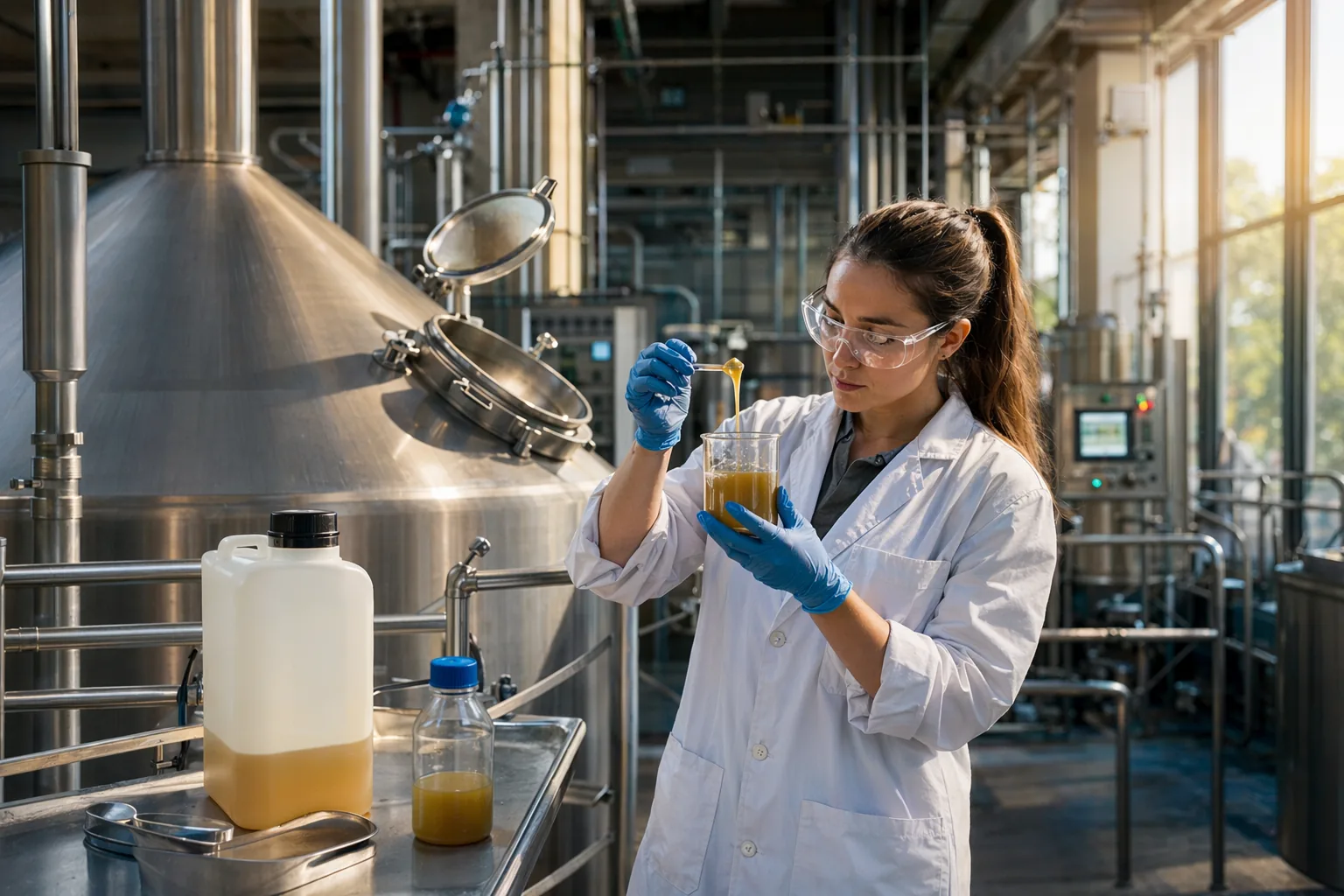
Beta-glucanase helps brewers manage wort viscosity, filtration performance, and extract recovery when working with barley, adjuncts, and high-beta-glucan grists.
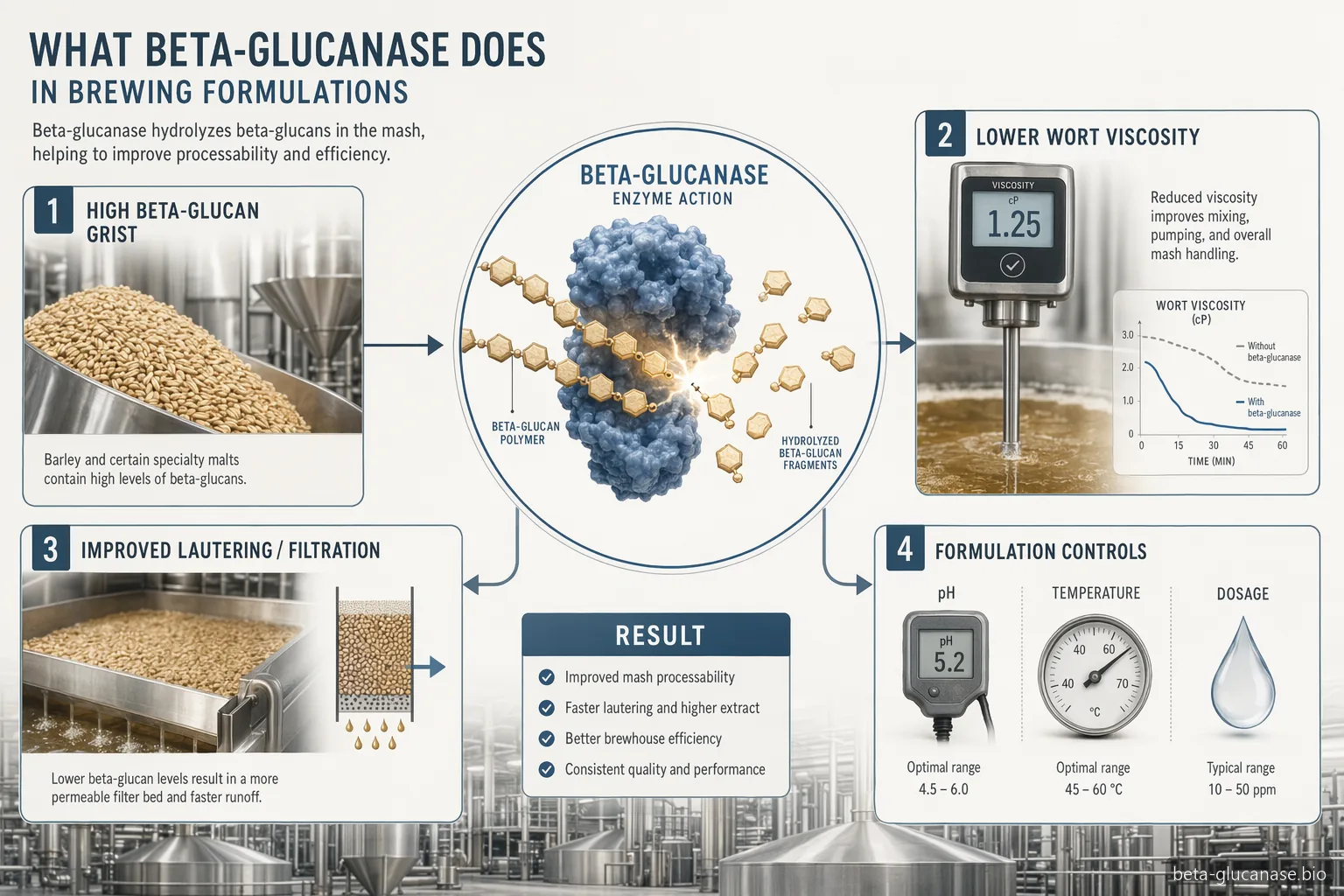
What is beta glucanase in brewing?
What is beta glucanase? In brewing, beta glucanase is an industrial enzyme preparation used to break down beta glucans, especially mixed-linkage beta-glucans from barley, oats, rye, wheat, and other cereal materials. These beta-glucans are cell-wall polysaccharides that can raise mash and wort viscosity when they are not sufficiently degraded during malting or mashing. For B2B brewers, the practical value of beta-glucanase is process control: faster wort separation, more predictable filtration, and improved handling of adjunct-rich formulations. The enzyme is often described as beta-glucanase or beta glucanase enzyme; some preparations include endo-glucanase activity that cleaves internal bonds in glucan chains. It is not a supplement positioning issue, and this page does not address consumer health claims. The formulation question is whether the enzyme activity, pH profile, thermal tolerance, and cost-in-use fit the brewery’s raw materials and brewhouse conditions.
Primary target: cereal beta-glucans that affect viscosity. • Typical use point: mash, adjunct slurry, or cereal cooker. • Main buyer concern: reliable process performance at scale.
What are beta glucans and why do they matter?
What are beta glucans? In brewing raw materials, beta glucans are structural carbohydrates found in grain cell walls. The phrase what is beta glucans is often used imprecisely, but for formulation work the key issue is their molecular size, solubility, and effect on fluid flow. Foods with high beta glucans include oats, barley, rye, and some mushrooms; however, brewing formulations are concerned mainly with cereal-derived beta-glucans entering the mash. If malt modification is low, adjunct inclusion is high, or process time is compressed, residual beta-glucans may carry into wort and beer. They can contribute to slow runoff, haze risk, difficult centrifugation, and reduced filter cycle length. Measuring beta-glucan level and viscosity helps determine whether beta-glucanase is needed. The enzyme should be evaluated as part of the entire raw-material plan, not as a one-size-fits-all additive.
High-risk inputs include under-modified malt and oat or barley adjuncts. • Key process indicators include viscosity, runoff time, and filtration pressure rise. • Raw-material variability should be built into dosage trials.
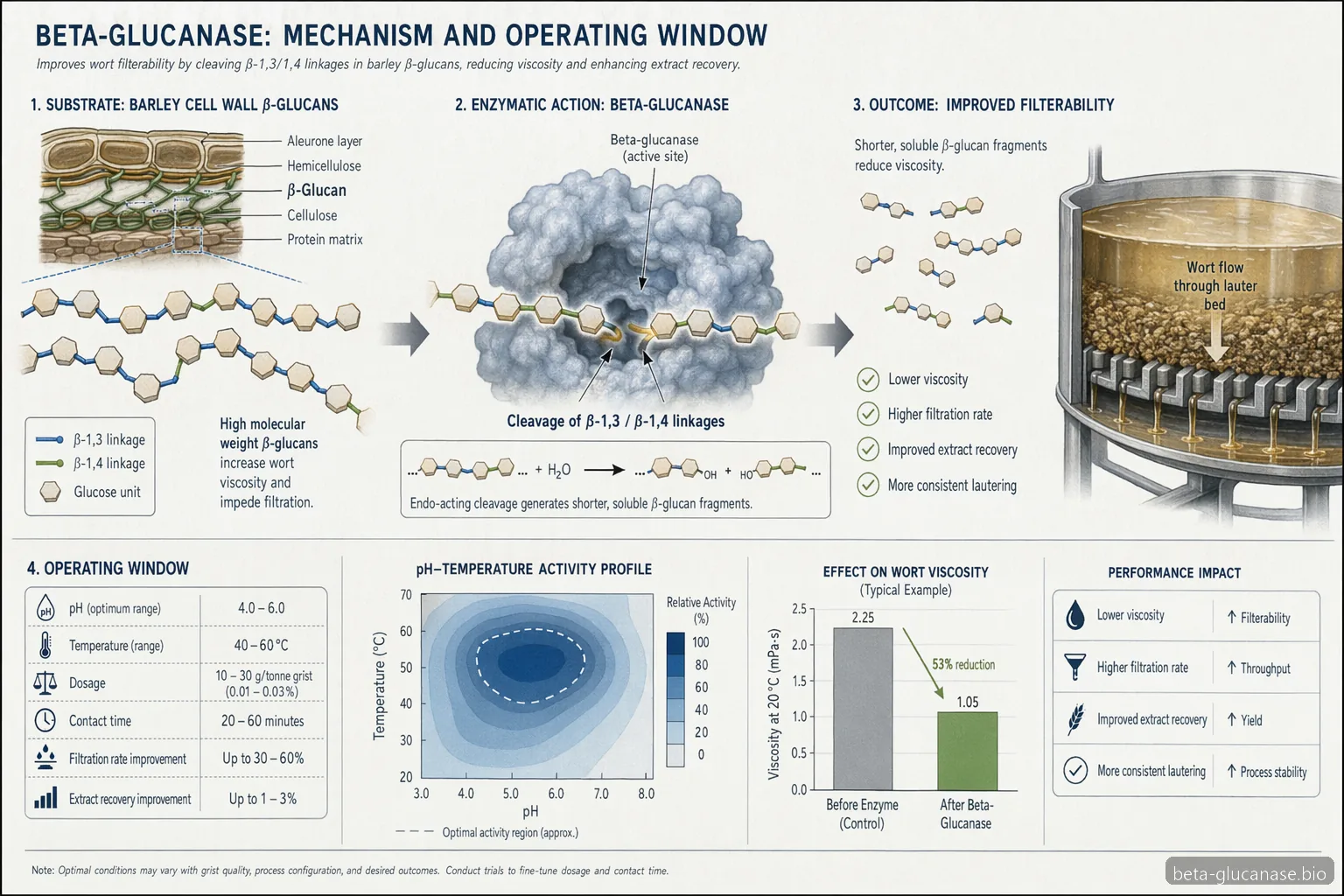
Formulation conditions: pH, temperature, and dosage
Beta-glucanase performance depends on the activity profile listed on the supplier’s TDS and confirmed through plant trials. Many brewing beta-glucanase products are designed for mash conditions around pH 4.5–6.0, with common operating windows near 45–65°C, although exact limits vary by enzyme source and stabilization. Dosage is normally expressed as enzyme activity per kilogram of grist or as product weight or volume per metric ton of raw material. A practical screening band may start around 50–300 g per metric ton of grist for concentrated dry or liquid products, but the correct dosage must be based on declared activity, substrate load, residence time, and target viscosity. Avoid overdosing without evidence; additional enzyme may not deliver proportional benefit once beta-glucan reduction reaches the process target. Inactivation should also be considered, because later wort boiling typically denatures residual enzyme activity.
Confirm pH and temperature windows from the TDS. • Start with bench screening before brewhouse trials. • Tie dosage to viscosity reduction and filtration performance.
How to validate beta-glucanase before scale-up
Pilot validation should compare a control mash against two or three beta-glucanase dosage levels under the brewery’s real grist, liquor ratio, mash profile, and lautering conditions. Useful QC checks include wort viscosity, beta-glucan concentration, extract yield, runoff time, turbidity, fermentability, filtration throughput, and sensory neutrality in finished beer. Record enzyme addition point, slurry uniformity, contact time, pH, calcium level, mash temperature, and any heat holds that may reduce activity. For brewing buyers, the goal is not simply to prove that beta-glucanase works in general, but to define the lowest effective dosage that delivers repeatable process benefit. Pilot trials should include raw-material variation where possible, such as different malt lots or adjunct percentages. Results can then be converted into cost-in-use per hectoliter, per metric ton of grist, or per filtration cycle improvement.
Run a no-enzyme control with identical mash conditions. • Measure both technical results and economic impact. • Document addition procedure for operator repeatability.
Supplier qualification for industrial enzyme buyers
A qualified beta-glucanase supplier should provide a current COA, TDS, and SDS for each commercial product and lot. The COA should list enzyme activity by a defined analytical method, lot number, manufacture date or retest date, and agreed quality parameters. The TDS should define recommended applications, dosage guidance, pH and temperature ranges, storage conditions, shelf life, carrier system, and handling notes. The SDS should support safe receiving, storage, PPE selection, spill response, and worker exposure controls, especially because enzyme powders and aerosols can be sensitizers. Buyers should also assess batch-to-batch consistency, packaging compatibility, lead time, technical support, sample availability, and change-control communication. Supplier qualification is strongest when commercial terms are linked to performance evidence, not only unit price. Cost-in-use should include enzyme price, dosage, yield impact, filtration capacity, downtime, and waste reduction.
Request COA, TDS, SDS, and activity method. • Check storage stability and packaging format. • Evaluate technical support for pilot and scale-up.
Technical Buying Checklist
Buyer Questions
Beta glucanase is used to hydrolyze cereal beta-glucans that can increase mash and wort viscosity. In practical brewing terms, it may improve lautering speed, wort separation, filtration stability, and handling of barley, oat, rye, or wheat adjuncts. The enzyme should be selected and dosed according to the supplier’s activity data, the brewery’s mash profile, and pilot results.
What foods contain beta glucans? Oats, barley, rye, wheat, and some mushrooms are common examples. For brewers, the most relevant sources are cereal grains and adjuncts entering the mash. Foods with high beta glucans are not a health-claim topic here; the brewing concern is whether cereal beta-glucans raise viscosity, slow runoff, or shorten filtration cycles.
There is no universal dose because products differ in activity, carrier concentration, pH profile, and temperature tolerance. A common development approach is to screen several levels, such as a low, medium, and high dose around the supplier’s recommended range, then select the lowest effective dosage. Confirm performance with viscosity, beta-glucan level, runoff time, extract yield, and filterability.
No. Beta-glucanase is a formulation and process tool, not a substitute for malt quality management. Malt modification, friability, beta-glucan level, adjunct percentage, mash schedule, and mill setting still matter. The best results usually come from combining raw-material specifications with targeted enzyme use, especially when grist variability or high adjunct rates create viscosity and filtration challenges.
Request a COA for lot-specific quality data, a TDS for activity, dosage, pH, temperature, storage, and application guidance, and an SDS for safe handling. Buyers should also ask for the enzyme activity assay method, shelf-life statement, packaging details, sample policy, change-control process, and technical support for pilot validation and cost-in-use modeling.
Beta-Glucanase for Research & Industry
Need Beta-Glucanase for your lab or production process?
ISO 9001 certified · Food-grade & research-grade · Ships to 80+ countries
Frequently Asked Questions
What is beta glucanase used for in brewing?
Beta glucanase is used to hydrolyze cereal beta-glucans that can increase mash and wort viscosity. In practical brewing terms, it may improve lautering speed, wort separation, filtration stability, and handling of barley, oat, rye, or wheat adjuncts. The enzyme should be selected and dosed according to the supplier’s activity data, the brewery’s mash profile, and pilot results.
What foods contain beta glucans, and does that matter for brewers?
What foods contain beta glucans? Oats, barley, rye, wheat, and some mushrooms are common examples. For brewers, the most relevant sources are cereal grains and adjuncts entering the mash. Foods with high beta glucans are not a health-claim topic here; the brewing concern is whether cereal beta-glucans raise viscosity, slow runoff, or shorten filtration cycles.
How much beta-glucanase should be added to mash?
There is no universal dose because products differ in activity, carrier concentration, pH profile, and temperature tolerance. A common development approach is to screen several levels, such as a low, medium, and high dose around the supplier’s recommended range, then select the lowest effective dosage. Confirm performance with viscosity, beta-glucan level, runoff time, extract yield, and filterability.
Can beta-glucanase replace good malt specification control?
No. Beta-glucanase is a formulation and process tool, not a substitute for malt quality management. Malt modification, friability, beta-glucan level, adjunct percentage, mash schedule, and mill setting still matter. The best results usually come from combining raw-material specifications with targeted enzyme use, especially when grist variability or high adjunct rates create viscosity and filtration challenges.
What documents should an industrial buyer request?
Request a COA for lot-specific quality data, a TDS for activity, dosage, pH, temperature, storage, and application guidance, and an SDS for safe handling. Buyers should also ask for the enzyme activity assay method, shelf-life statement, packaging details, sample policy, change-control process, and technical support for pilot validation and cost-in-use modeling.
Related: Beta-Glucanase for Brewing Wort Viscosity and Lautering
Turn This Guide Into a Supplier Brief Request a beta-glucanase sample, TDS, COA, SDS, and pilot trial plan for your brewing formulation. See our application page for Beta-Glucanase for Brewing Wort Viscosity and Lautering at /applications/beta-glucanase-brewing-wort-viscosity/ for specs, MOQ, and a free 50 g sample.
Contact Us to Contribute