Beta Glucanase Wine: How to Use Beta-Glucanase in Wine Formulations
Industrial guide to beta-glucanase for wine: dosage bands, pH/temperature, QC checks, pilot trials, COA/TDS/SDS, and supplier qualification.
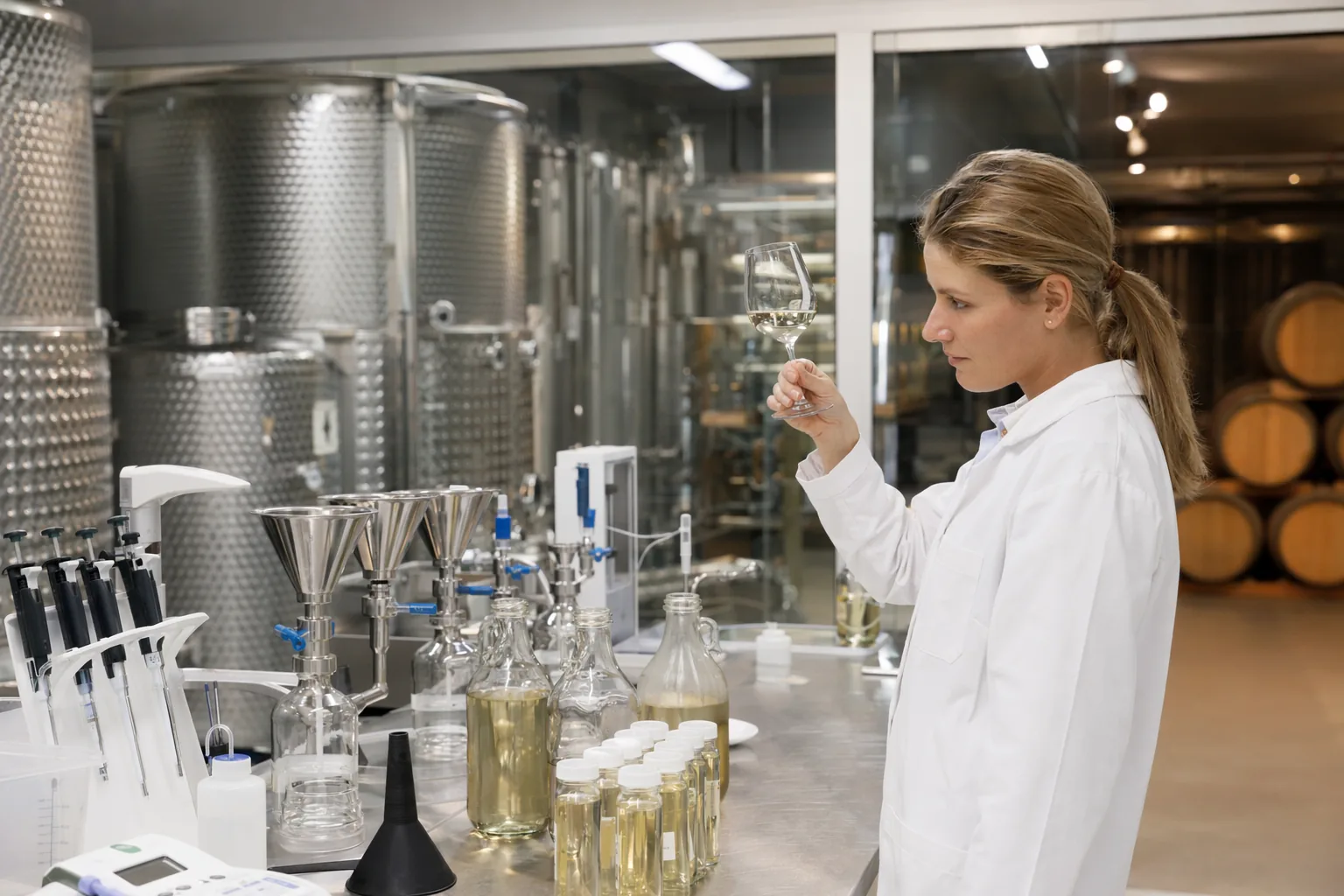
A practical B2B guide for wineries, ingredient buyers, and formulation teams evaluating beta-glucanase to improve processing, filtration, and clarification in difficult wines.
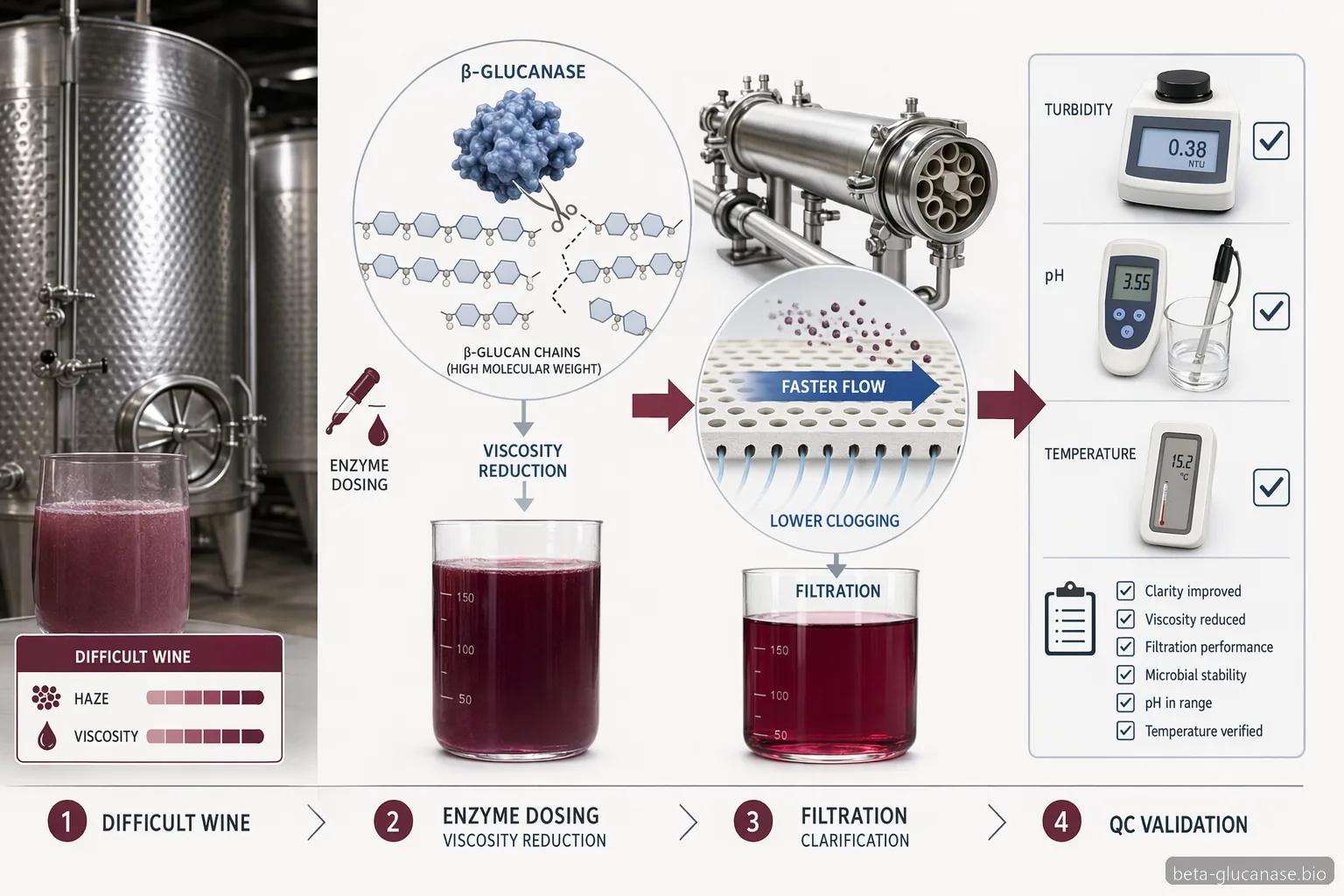
Why beta-glucanase matters in wine processing
Beta glucanase wine use is mainly a processing aid strategy for wines affected by beta glucans, especially glucan-rich polysaccharides associated with certain grapes, fungal pressure, or challenging lees conditions. What are beta glucans? They are glucose-based polysaccharides; beta-glucans are also found in cereals, yeast, and fungi. Foods with high beta glucans include oats and barley, but this page addresses industrial enzyme processing, not supplement or health claims. In wine, elevated beta glucans can increase viscosity, reduce clarification efficiency, and create filtration bottlenecks. A suitable beta glucanase enzyme, often described as beta-glucanase or endo-glucanase depending on activity profile, helps hydrolyze targeted glucan chains into smaller fragments that pass more readily through processing steps. The commercial objective is not simply enzyme addition; it is predictable throughput, lower rework, stable quality, and a documented cost-in-use case for production-scale adoption.
Primary value: improved clarification and filtration behavior • Key risk: underdosing, poor contact time, or wrong enzyme activity profile • Best practice: run bench and pilot trials before plant-scale dosing
Formulation conditions: pH, temperature, timing, and dosage
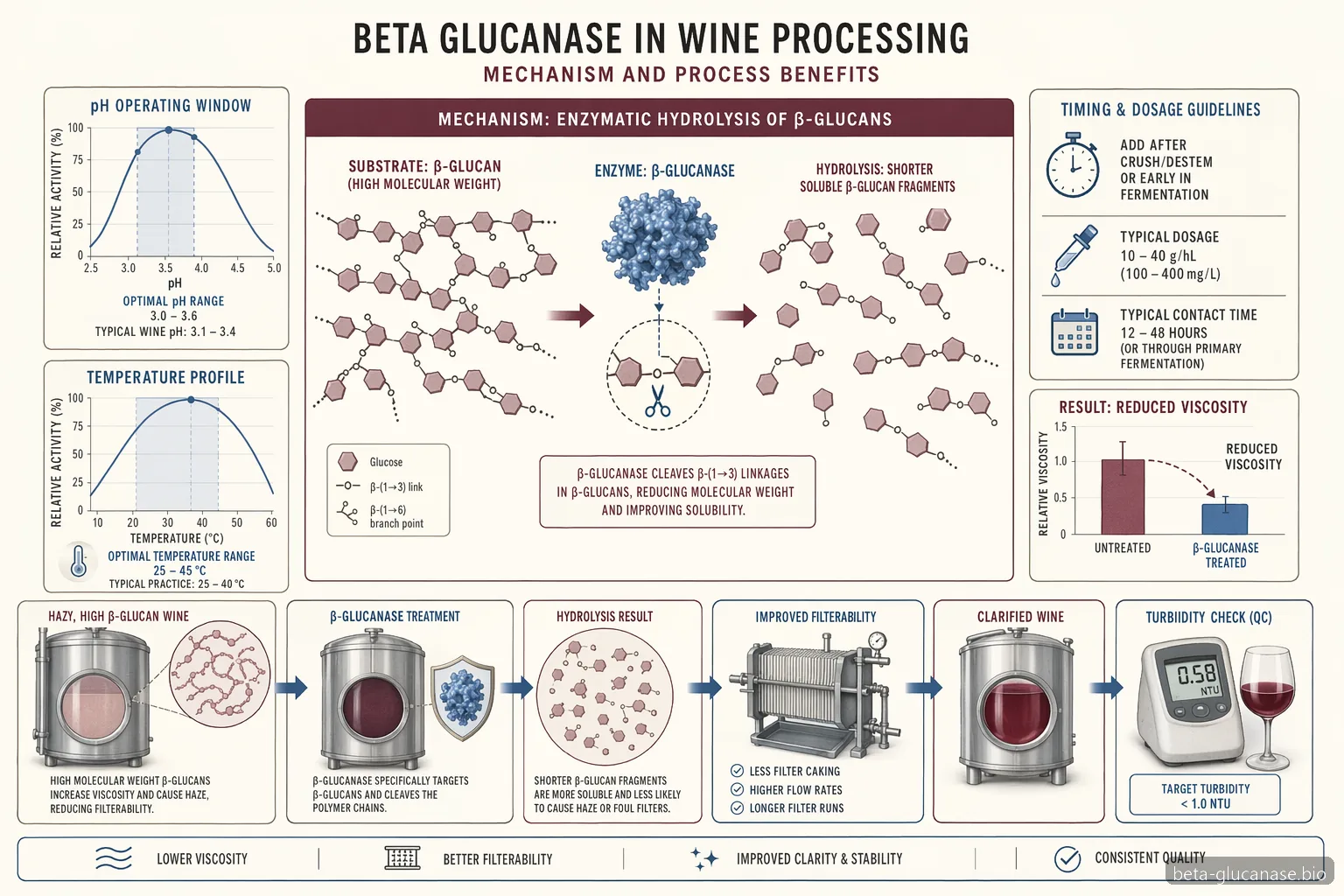
What is beta glucanase in a wine formulation context? It is an enzyme preparation selected for activity against beta glucans under acidic, alcoholic, low-temperature winery conditions. Most wine applications operate around pH 3.0 to 4.0, with cellar temperatures often from 10 to 25°C; some producers use warmer controlled holding, such as 25 to 40°C, when compatible with wine style and microbial controls. Dosage bands vary widely by activity units and product concentration, but screening often starts around 1 to 10 g/hL for concentrated commercial preparations, or an equivalent activity-based dose recommended in the TDS. Difficult lots may require higher trials, extended contact, or combined pectinase and beta-glucanase programs. Add after pressing, during settling, on problem lots before filtration, or during clarification trials, depending on solids, alcohol, SO2, and production schedule. Always validate enzyme deactivation or downstream removal expectations with the supplier.
Typical pH: 3.0-4.0, depending on wine style • Typical temperature: 10-25°C cellar use; warmer trials only when appropriate • Screening dosage: commonly 1-10 g/hL or activity-equivalent • Contact time: often several hours to several days, verified by QC
Choosing the right beta-glucanase activity profile
Not every beta glucanase is interchangeable. Brewing products may target cereal beta glucans differently from wine enzymes intended for fungal or yeast-derived glucans. For wine, buyers should confirm whether the beta-glucanase contains relevant endo-glucanase activities for beta-1,3 and beta-1,6 linkages, plus whether side activities such as pectinase, hemicellulase, or cellulase are present. Side activities may be beneficial for juice yield or clarification, but they can also affect mouthfeel, lees behavior, or sensory outcomes if not controlled. The TDS should describe activity units, recommended substrate, pH and temperature profile, dosage guidance, storage, solubility, and compatibility notes. The COA should identify batch-specific activity and basic quality parameters. The SDS should support safe handling, dust control, PPE selection, spill response, and storage classification. A qualified supplier should explain how the enzyme performs in alcoholic, acidic matrices rather than only in neutral laboratory assays.
Match linkage specificity to the wine problem • Review side activities before sensory-sensitive applications • Compare products by activity and cost-in-use, not only price per kilogram
Pilot validation and production QC checks
Pilot validation should convert the idea of beta glucanase wine treatment into measurable processing evidence. Start with untreated control, low, medium, and high enzyme doses, then run each condition at the planned cellar temperature and contact time. Measure viscosity where possible, plus turbidity in NTU, settling rate, lees compaction, filterability index, membrane flux, pressure rise, filtrate clarity, and wine loss. For problem wines, a beta glucan assay or supplier-supported screening test can help confirm that beta glucans are a real root cause rather than protein instability, pectin load, microbial haze, or suspended solids. Include sensory checks because process aids must protect aroma, color, mouthfeel, and varietal expression. Production QC should document lot number, addition point, dose, mixing method, time, temperature, pH, SO2, alcohol, and filtration result. This data supports scale-up decisions, deviation handling, and future purchasing specifications.
Use untreated controls in every trial • Track filtration pressure and flux, not only turbidity • Confirm sensory neutrality before routine use • Document batch traceability and process conditions
Supplier qualification and cost-in-use evaluation
Industrial enzyme buying should evaluate technical fit, documentation, reliability, and economics. Request COA, TDS, SDS, recommended storage conditions, shelf-life, batch traceability, allergen or GM statements where available, and guidance on food-processing suitability for the intended market. Avoid selecting only by quoted price; a higher-activity beta glucanase may reduce dosage, contact time, filtration labor, membrane fouling, rework, or wine losses. Cost-in-use should include enzyme dose, processing time, energy, filter media, cartridge life, tank occupancy, yield recovery, downtime, and rejected lots. Supplier qualification should also assess sample availability, pilot support, regulatory responsiveness, lead time, minimum order quantity, packaging, cold-chain needs if any, and consistency between batches. The best commercial outcome is a reproducible operating window: clear dosing rules, reliable QC triggers, defined acceptance criteria, and a supplier who can support scale-up from lab trial to full winery production.
Request COA, TDS, SDS, and batch traceability • Calculate cost per hL treated, not only enzyme unit price • Qualify supply continuity, packaging, and technical support • Keep purchase specifications tied to activity units and performance
Technical Buying Checklist
Buyer Questions
Beta glucanase is used as a processing aid to hydrolyze beta glucans that can increase viscosity and interfere with clarification or filtration. In wine, the goal is typically better filter throughput, lower pressure rise, improved settling, and fewer bottlenecks on difficult lots. It should be validated with bench or pilot trials because the benefit depends on the wine matrix, enzyme activity profile, temperature, pH, and contact time.
Beta glucans are glucose-based polysaccharides found in materials such as cereals, yeast, and fungi. In wine, certain beta-glucans can contribute to high viscosity, slow settling, and rapid filter fouling. They may form a processing problem even when turbidity alone does not look extreme. Enzymatic hydrolysis with a suitable beta-glucanase can reduce molecular size and improve processability when beta glucans are the underlying cause.
Dosage depends on the enzyme preparation and its activity units, so the supplier TDS should be the starting point. Many screening trials begin around 1-10 g/hL for concentrated commercial products, or an equivalent activity-based dose. Problem lots may need adjusted dosing or longer contact. Always compare untreated controls and multiple dose levels, then confirm filtration, sensory, and yield results before routine production use.
Yes, combined enzyme programs are common when a wine has multiple polysaccharide-related processing issues, but compatibility must be verified. Pectinase targets pectins, while beta glucanase targets beta glucans, so they solve different problems. Check pH, temperature, SO2, alcohol, addition sequence, contact time, and sensory impact. A supplier can help determine whether a blended product or separate additions offer better control and cost-in-use.
Buyers should request a COA for batch-specific activity and quality data, a TDS for use conditions and dosage guidance, and an SDS for handling and safety. Also ask for storage requirements, shelf-life, batch traceability, packaging details, allergen or GM statements where available, and pilot support. Supplier qualification should consider consistency, lead time, technical responsiveness, and the ability to support cost-in-use calculations.
Beta-Glucanase for Research & Industry
Need Beta-Glucanase for your lab or production process?
ISO 9001 certified · Food-grade & research-grade · Ships to 80+ countries
Frequently Asked Questions
What is beta glucanase used for in wine?
Beta glucanase is used as a processing aid to hydrolyze beta glucans that can increase viscosity and interfere with clarification or filtration. In wine, the goal is typically better filter throughput, lower pressure rise, improved settling, and fewer bottlenecks on difficult lots. It should be validated with bench or pilot trials because the benefit depends on the wine matrix, enzyme activity profile, temperature, pH, and contact time.
What are beta glucans and why do they affect filtration?
Beta glucans are glucose-based polysaccharides found in materials such as cereals, yeast, and fungi. In wine, certain beta-glucans can contribute to high viscosity, slow settling, and rapid filter fouling. They may form a processing problem even when turbidity alone does not look extreme. Enzymatic hydrolysis with a suitable beta-glucanase can reduce molecular size and improve processability when beta glucans are the underlying cause.
How much beta-glucanase should a winery use?
Dosage depends on the enzyme preparation and its activity units, so the supplier TDS should be the starting point. Many screening trials begin around 1-10 g/hL for concentrated commercial products, or an equivalent activity-based dose. Problem lots may need adjusted dosing or longer contact. Always compare untreated controls and multiple dose levels, then confirm filtration, sensory, and yield results before routine production use.
Can beta glucanase be combined with pectinase in wine?
Yes, combined enzyme programs are common when a wine has multiple polysaccharide-related processing issues, but compatibility must be verified. Pectinase targets pectins, while beta glucanase targets beta glucans, so they solve different problems. Check pH, temperature, SO2, alcohol, addition sequence, contact time, and sensory impact. A supplier can help determine whether a blended product or separate additions offer better control and cost-in-use.
What documents should B2B buyers request before purchasing?
Buyers should request a COA for batch-specific activity and quality data, a TDS for use conditions and dosage guidance, and an SDS for handling and safety. Also ask for storage requirements, shelf-life, batch traceability, packaging details, allergen or GM statements where available, and pilot support. Supplier qualification should consider consistency, lead time, technical responsiveness, and the ability to support cost-in-use calculations.
Related: Beta-Glucanase for Brewing Wort Viscosity and Lautering
Turn This Guide Into a Supplier Brief Request beta-glucanase samples, COA/TDS/SDS, and pilot dosing support for your wine process. See our application page for Beta-Glucanase for Brewing Wort Viscosity and Lautering at /applications/beta-glucanase-brewing-wort-viscosity/ for specs, MOQ, and a free 50 g sample.
Contact Us to Contributehello@mail.beta-glucanase.bio